


Hey there! As a nut housing supplier, I've been in the game for quite a while, and I know how important it is to ensure the quality of our products. Today, I'm gonna talk about the inspection items for a disassembled nut housing.
First off, let's understand why we need to inspect a disassembled nut housing. When a nut housing is taken apart, it gives us a chance to thoroughly check every single component. This helps us catch any potential issues early on, whether it's from manufacturing defects or wear and tear during use.
1. Visual Inspection
The first step in inspecting a disassembled nut housing is a good old - fashioned visual check. We look for any obvious signs of damage, like cracks, chips, or dents. Cracks can be a big problem as they can lead to structural failure over time. Even a small crack can grow under stress, and that's not something we want to happen.
We also check for any signs of corrosion. Corrosion can weaken the material of the nut housing and affect its performance. In a nut housing, corrosion might start in areas where the protective coating has been damaged or in places where moisture can accumulate.
Another thing we look at is the surface finish. A smooth surface finish is crucial for the proper functioning of the nut housing. Rough surfaces can cause increased friction, which not only reduces efficiency but also can lead to premature wear of the components.
2. Dimensional Inspection
Accurate dimensions are key for a nut housing. We use precision measuring tools like calipers, micrometers, and gauges to check the dimensions of the various parts.
The inner diameter of the nut housing needs to be within a specific tolerance range. If it's too large, the nut might not fit securely, leading to play and inaccurate movement. On the other hand, if it's too small, the nut might not be able to move freely, causing excessive stress on the components.
The outer diameter also matters, especially when the nut housing needs to fit into a specific assembly. Any deviation from the specified dimensions can make it difficult or impossible to install the nut housing correctly.
We also measure the length and width of the nut housing. These dimensions ensure that the nut housing fits properly in the overall system and that it aligns correctly with other components.

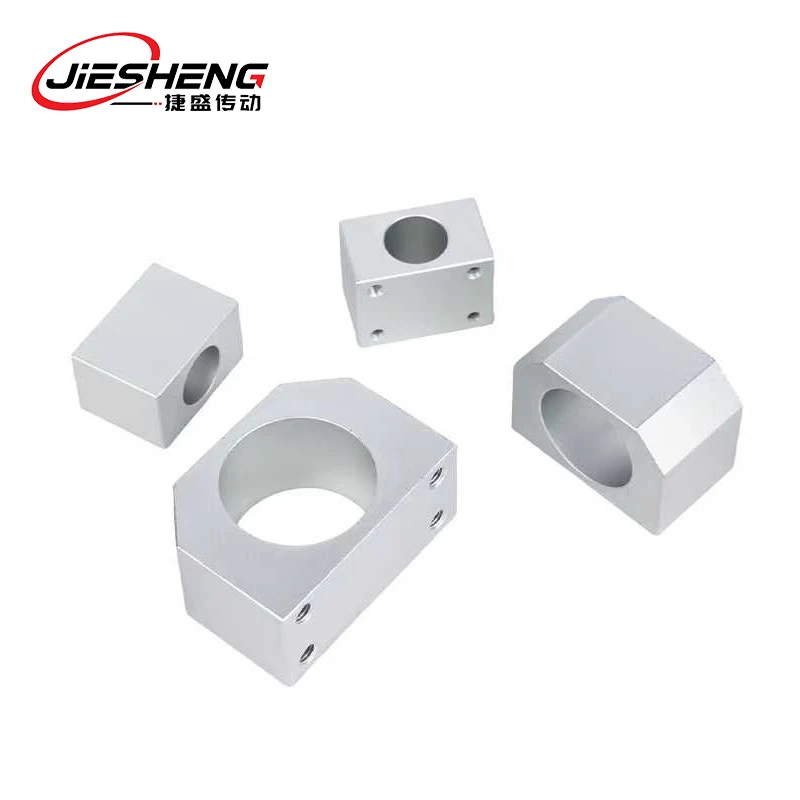
3. Thread Inspection
The threads in a nut housing are critical for its functionality. We check the thread pitch, which is the distance between adjacent threads. An incorrect thread pitch can prevent the nut from engaging properly, leading to poor performance or even failure.
The thread profile is also important. It should match the standard profile for the type of nut being used. Any irregularities in the thread profile can cause the nut to bind or not tighten properly.
We also look for any signs of thread damage, such as stripped threads or burrs. Stripped threads can't hold the nut securely, while burrs can make it difficult to install or remove the nut.
4. Material Inspection
The material of the nut housing plays a big role in its performance and durability. We can use various methods to check the material properties.
One common method is hardness testing. Hardness is an important property as it determines the nut housing's resistance to wear and deformation. We use hardness testers to measure the hardness of the material at different points on the nut housing.
We also check the material composition. Different applications might require different materials, and we need to make sure that the nut housing is made of the right material. For example, some applications might require a high - strength steel, while others might need a more corrosion - resistant material.
5. Functional Inspection
After all the physical inspections, we perform a functional inspection. This involves assembling the nut housing and testing it in a simulated operating environment.
We check the smoothness of the nut's movement. The nut should be able to move freely along the threads without any jerks or binding. Any problems with the movement could indicate issues with the thread quality, dimensional accuracy, or surface finish.
We also test the load - carrying capacity of the nut housing. This is important to ensure that it can handle the forces it will be subjected to in real - world applications. We apply a known load to the nut housing and observe its performance.
Why These Inspections Matter
These inspections are not just for show. They are essential for ensuring the quality and reliability of our nut housings. By catching any issues early, we can prevent costly failures in the field.
For example, a cracked nut housing might seem like a minor issue at first, but if it fails during operation, it could lead to a breakdown of the entire system. This can result in downtime, repair costs, and even safety risks.
By providing high - quality nut housings, we build trust with our customers. They know that when they buy a nut housing from us, it has been thoroughly inspected and meets the highest standards.
Related Products
If you're interested in different types of nut housings, we have some great options. Check out our Ball Screw Housing, which is designed for high - precision applications. Our Ball Screw Nut Housing is another popular choice, offering excellent performance and durability. And if you need a specific size, our 1605 Ball Screw Nut Housing might be just what you're looking for.
Let's Talk Business
If you're in the market for nut housings, I'd love to have a chat with you. Whether you need a standard nut housing or a custom - designed one, we can work together to find the best solution for your needs. Reach out to us, and let's start a conversation about your requirements.
References
- Machinery's Handbook, 31st Edition
- ASME Standards for Mechanical Components


