


The ball screw housing is a critical component in many precision mechanical systems, and its performance can significantly impact the overall efficiency and accuracy of the machinery. One of the key factors that influence the performance of a ball screw housing is the ball circulation system. In this blog, as a Ball Screw Housing supplier, I will explore how the ball circulation system affects the performance of a ball screw housing.

Understanding the Ball Screw Housing and Ball Circulation System
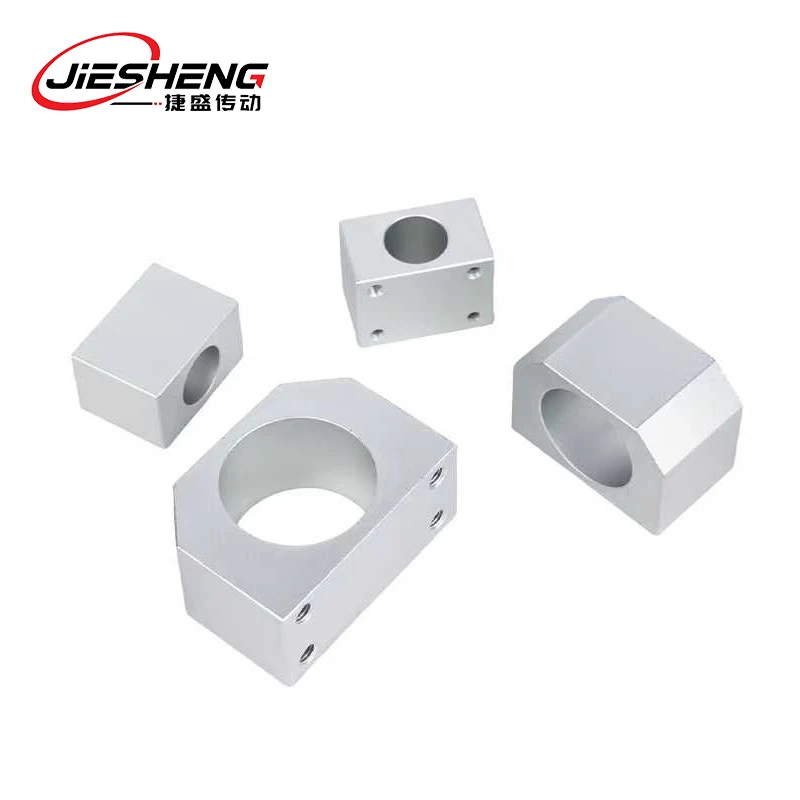
Before delving into the impact of the ball circulation system, it's essential to understand what a ball screw housing and a ball circulation system are. A Ball Screw Housing is a protective casing that encloses the ball screw and nut assembly. It provides support and guidance for the ball screw, ensuring smooth and accurate movement.
The ball circulation system, on the other hand, is responsible for the continuous movement of the balls within the ball screw and nut assembly. There are several types of ball circulation systems, including external circulation, internal circulation, and end cap circulation. Each type has its own characteristics and advantages, which can affect the performance of the ball screw housing in different ways.
Impact on Efficiency
One of the primary ways the ball circulation system affects the performance of a ball screw housing is through its impact on efficiency. A well - designed ball circulation system can reduce friction and energy loss, allowing the ball screw to operate more smoothly and efficiently.
In an external circulation system, the balls are recirculated outside the nut. This type of system can handle a large number of balls, which can increase the load - carrying capacity of the ball screw. However, external circulation systems may be more prone to contamination, which can reduce efficiency over time.
Internal circulation systems, on the other hand, keep the balls within the nut. This design reduces the risk of contamination and can provide a more compact and efficient solution. The balls move in a closed loop, which minimizes the distance they need to travel, resulting in less friction and energy loss.
End cap circulation systems use end caps to guide the balls back into the load path. This system is relatively simple and cost - effective. It can provide good efficiency and is suitable for applications where space is limited.
Impact on Precision
Precision is another crucial aspect of ball screw housing performance. The ball circulation system plays a vital role in maintaining the accuracy of the ball screw's movement.
A smooth and consistent ball circulation is essential for achieving high precision. If the ball circulation system is not properly designed or maintained, the balls may experience uneven movement, which can lead to positional errors and reduced accuracy.
For example, in a poorly designed external circulation system, the balls may collide or get stuck during the recirculation process. This can cause vibrations and fluctuations in the movement of the ball screw, resulting in inaccurate positioning.
Internal circulation systems are generally better at maintaining precision because the balls are contained within a closed environment. The smooth and continuous movement of the balls ensures that the ball screw can achieve high - precision positioning.
Impact on Load - Carrying Capacity
The load - carrying capacity of a ball screw housing is also affected by the ball circulation system. The number of balls and the way they are circulated can determine how much load the ball screw can handle.
External circulation systems typically have a higher load - carrying capacity because they can accommodate more balls. The large number of balls distributes the load evenly, reducing the stress on each individual ball. This allows the ball screw to handle heavier loads without premature wear or failure.
Internal circulation systems, while generally having a lower load - carrying capacity compared to external circulation systems, can still provide sufficient load - bearing capabilities for many applications. The compact design of internal circulation systems makes them suitable for applications where space is limited, and the load requirements are not extremely high.
Impact on Durability
Durability is an important consideration for any mechanical component, and the ball screw housing is no exception. The ball circulation system can have a significant impact on the durability of the ball screw housing.
A well - designed ball circulation system can reduce wear and tear on the balls and the ball screw housing. For example, in an internal circulation system, the balls move in a smooth and controlled manner, which reduces the friction and abrasion between the balls and the raceways. This can extend the lifespan of the ball screw housing and reduce the need for frequent maintenance.
On the other hand, a poorly designed ball circulation system can lead to premature wear and failure. For instance, if the balls in an external circulation system are not properly guided, they may collide with the housing or other components, causing damage and reducing the durability of the ball screw housing.
Impact on Noise and Vibration
Noise and vibration are common issues in ball screw systems, and the ball circulation system can play a role in reducing or increasing these problems.
A smooth and efficient ball circulation system can minimize noise and vibration. When the balls move smoothly through the circulation system, there is less impact and friction, which results in quieter operation.
In contrast, a poorly designed ball circulation system can cause excessive noise and vibration. For example, if the balls are not properly seated or if there is a misalignment in the circulation path, the balls may bounce or collide, creating noise and vibration. This can not only be annoying but also affect the performance and accuracy of the ball screw housing.
Choosing the Right Ball Circulation System
As a Ball Screw Housing supplier, I understand the importance of choosing the right ball circulation system for different applications. When selecting a ball circulation system, several factors need to be considered, including the load requirements, precision requirements, space limitations, and budget.
For applications that require high load - carrying capacity and can tolerate a relatively large size, an external circulation system may be the best choice. However, if precision and compactness are the primary concerns, an internal circulation system may be more suitable.
End cap circulation systems are a good option for applications where cost - effectiveness and simplicity are important. They can provide a balance between performance and cost.
Conclusion
In conclusion, the ball circulation system has a profound impact on the performance of a ball screw housing. It affects efficiency, precision, load - carrying capacity, durability, and noise and vibration levels. As a Ball Screw Housing supplier, I am committed to providing high - quality ball screw housings with optimized ball circulation systems to meet the diverse needs of our customers.
If you are interested in purchasing Ball Screw Nut Housing or 1605 Ball Screw Nut Housing, or if you have any questions about ball screw housing performance and ball circulation systems, please feel free to contact us for further discussion and procurement negotiations.
References
- "Ball Screw Design and Application Handbook"
- "Precision Ball Screw Technology"
- Industry research reports on ball screw systems


