


As a trusted ball screw supplier, I often encounter inquiries from clients regarding the energy consumption of ball screws. Understanding the energy consumption of ball screws is crucial for various applications, especially in industries where efficiency and cost - effectiveness are top priorities. In this blog, I will delve into the factors that influence the energy consumption of ball screws, how to calculate it, and the significance of energy - efficient ball screws in modern machinery.
Factors Influencing the Energy Consumption of Ball Screws
Friction
Friction is one of the primary factors that affect the energy consumption of ball screws. There are two main types of friction in ball screws: sliding friction and rolling friction. Sliding friction occurs between the ball and the raceway when the ball screw is in operation. Although ball screws are designed to minimize sliding friction by using balls to transfer motion, some sliding still occurs, especially during start - up and under high - load conditions.
Rolling friction, on the other hand, is the friction that occurs as the balls roll along the raceway. The quality of the materials used for the balls and the raceway, as well as the surface finish, can significantly impact rolling friction. High - quality materials with smooth surfaces reduce rolling friction, thereby decreasing energy consumption. For example, ball screws made from high - grade steel alloys with precision - ground raceways tend to have lower friction and, thus, better energy efficiency.
Load
The load applied to the ball screw is another critical factor. Higher loads require more energy to move the ball screw. When a heavy load is placed on the ball screw, the balls have to work harder to roll along the raceway, increasing the frictional forces and, consequently, the energy consumption. In applications such as industrial presses or heavy - duty CNC machines, where large loads are common, it is essential to select a ball screw with a sufficient load - carrying capacity to ensure efficient operation. Overloading a ball screw not only increases energy consumption but also shortens its lifespan.
Speed
The operating speed of the ball screw also affects energy consumption. As the speed increases, the frictional forces and the inertial forces acting on the ball screw components also increase. At high speeds, the balls experience greater centrifugal forces, which can cause additional wear and increase energy requirements. Therefore, it is important to match the speed of the ball screw to the requirements of the application. For high - speed applications, specialized ball screws with features such as high - speed ball retainers and optimized ball - path designs can be used to reduce energy consumption.
Lubrication
Proper lubrication is vital for reducing friction and energy consumption in ball screws. Lubricants form a thin film between the balls and the raceway, reducing direct contact and minimizing wear. There are different types of lubricants available for ball screws, including grease and oil. Grease is commonly used in applications where maintenance intervals are long, as it provides long - lasting lubrication. Oil, on the other hand, is preferred in high - speed applications due to its better heat - dissipation properties. Regular lubrication and using the right type of lubricant can significantly improve the energy efficiency of ball screws.
Calculating the Energy Consumption of Ball Screws
Calculating the energy consumption of ball screws is a complex process that involves considering multiple factors. One common approach is to use the power formula (P = F\times v), where (P) is power (which is related to energy consumption over time), (F) is the force required to move the load, and (v) is the velocity of the ball screw.
The force (F) can be calculated by considering the load, friction, and any additional forces acting on the ball screw. For example, the frictional force (F_f) can be estimated using the coefficient of friction (\mu) and the normal force (N) between the balls and the raceway ((F_f=\mu\times N)). The normal force (N) is related to the load applied to the ball screw.
The velocity (v) of the ball screw is determined by its rotational speed and the lead of the screw. The lead is the distance the nut moves along the screw axis for one complete rotation. By combining these factors, an approximation of the power required to operate the ball screw can be obtained. However, it should be noted that real - world conditions, such as variations in load, temperature, and lubrication, can affect the accuracy of these calculations.

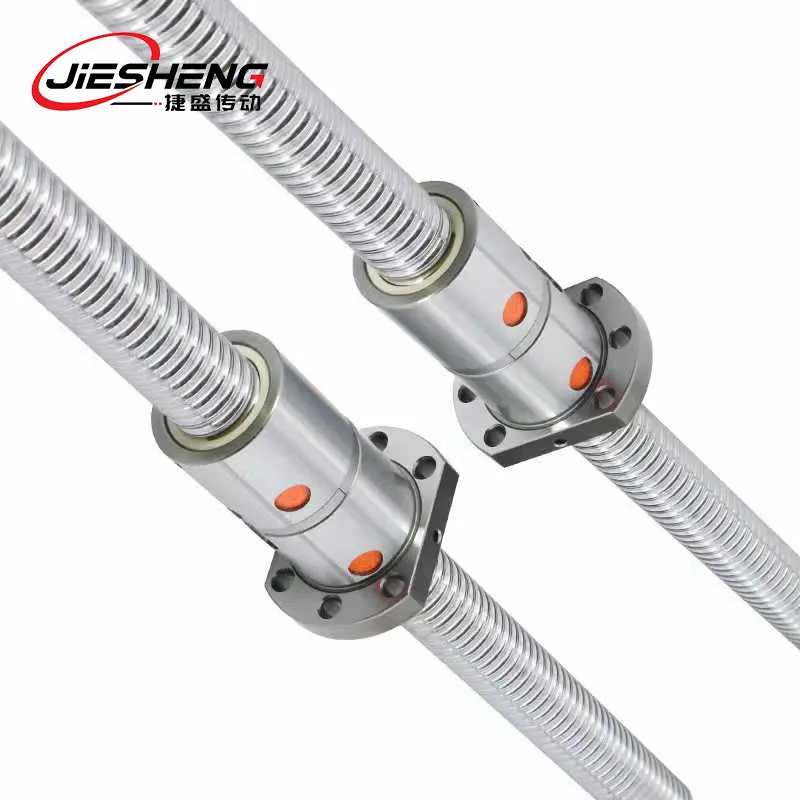
Significance of Energy - Efficient Ball Screws
Cost Savings
Energy - efficient ball screws can lead to significant cost savings in the long run. In industries where ball screws are used extensively, such as manufacturing and automation, reducing energy consumption can lower electricity bills. Over the lifespan of a machine, these savings can be substantial, making energy - efficient ball screws a cost - effective investment.
Environmental Impact
In today's world, environmental sustainability is a growing concern. By using energy - efficient ball screws, companies can reduce their carbon footprint. Lower energy consumption means less demand for electricity, which in turn reduces the emissions associated with power generation. This not only benefits the environment but also enhances the company's reputation as a responsible corporate citizen.
Performance and Reliability
Energy - efficient ball screws often have better performance and reliability. Since they operate with less friction, there is less wear and tear on the components. This results in longer service life and fewer breakdowns, reducing maintenance costs and downtime. For example, in a High Precision Ball Screw, which is designed for high - accuracy applications, energy efficiency can contribute to maintaining the precision and repeatability of the machine over time.
Applications and Energy Consumption
CNC Machines
CNC (Computer Numerical Control) machines rely on ball screws for precise motion control. In a CNC Machine Lead Screw, energy consumption can vary depending on the type of machining operation. For example, during high - speed milling or turning, the ball screws need to move rapidly to position the cutting tool accurately. By using energy - efficient ball screws, the overall energy consumption of the CNC machine can be reduced, improving its cost - effectiveness.
Robotics
Robots use ball screws in their joints and linear motion systems. In robotic applications, energy efficiency is crucial as robots often operate continuously. Energy - efficient ball screws can extend the battery life of mobile robots or reduce the power requirements of stationary robots. This allows robots to perform more tasks without frequent recharging or power supply upgrades.
Automation Systems
Automation systems, such as conveyor systems and pick - and - place machines, also benefit from energy - efficient ball screws. These systems often require precise linear motion to move products or components. By minimizing energy consumption, automation systems can operate more efficiently, increasing productivity and reducing operating costs.
Our Offerings as a Ball Screw Supplier
As a leading ball screw supplier, we offer a wide range of ball screws, including High Precision Ball Screw, CNC Machine Lead Screw, and Ball Screw Rod Assembly. Our ball screws are designed with energy efficiency in mind. We use high - quality materials and advanced manufacturing techniques to minimize friction and optimize performance.
We also provide technical support to help our clients select the right ball screw for their specific applications. Our team of experts can assist in calculating the energy consumption of different ball screw configurations and recommend the most energy - efficient solution. Whether you are looking for a ball screw for a small - scale automation project or a large - scale industrial machine, we have the products and expertise to meet your needs.
Contact for Procurement and Consultation
If you are interested in learning more about the energy consumption of ball screws or are looking to purchase high - quality ball screws for your application, we invite you to contact us. Our sales team is ready to answer your questions, provide detailed product information, and assist you in the procurement process. By choosing our ball screws, you can enjoy the benefits of energy efficiency, cost savings, and reliable performance.
References
- "Ball Screw Design and Application Handbook" by various industry experts.
- Research papers on ball screw technology from leading academic journals in the field of mechanical engineering.


