


As a supplier of SFU Ball Screws, I've witnessed firsthand the pivotal role these components play in various industries, from precision manufacturing to automation. SFU Ball Screws are renowned for their efficiency, accuracy, and reliability, converting rotary motion into linear motion with minimal friction. However, one factor that can significantly undermine their performance is misalignment. In this blog, we'll explore the impact of misalignment on SFU Ball Screws and why it's crucial to address this issue promptly.
Understanding SFU Ball Screws
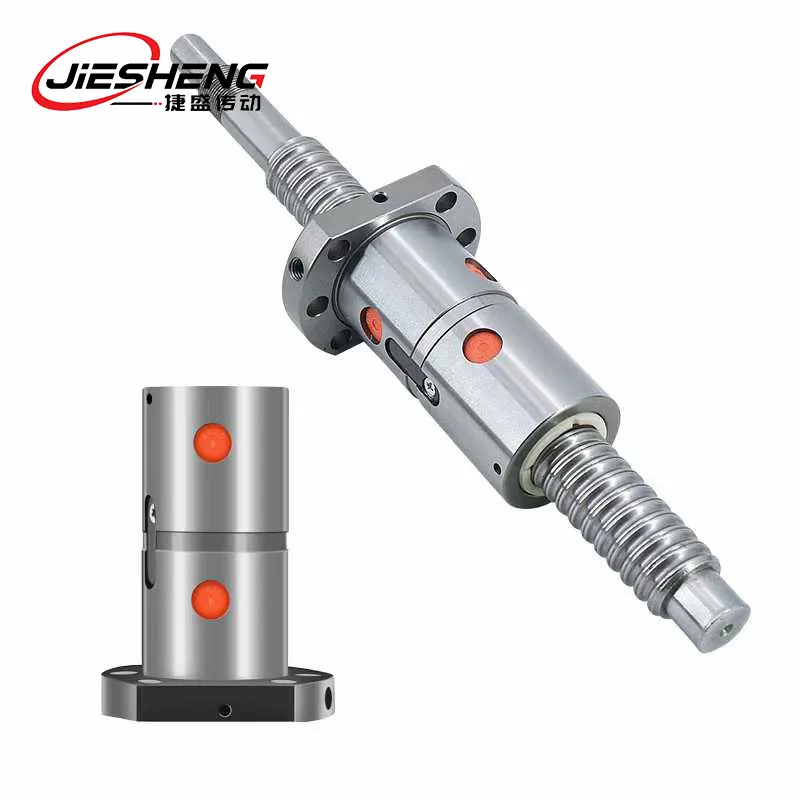
Before delving into the effects of misalignment, let's briefly understand what SFU Ball Screws are. SFU Ball Screws are a type of mechanical linear actuator that uses ball bearings to minimize friction between the screw and the nut. This design allows for smooth and precise linear motion, making them ideal for applications that require high accuracy and repeatability, such as CNC Machine Lead Screw systems and robotics.
The efficiency of SFU Ball Screws lies in their ability to transfer power from the motor to the load with minimal energy loss. The ball bearings roll between the screw and the nut, reducing the sliding friction that would otherwise occur in a traditional lead screw. This not only improves the overall efficiency of the system but also extends the lifespan of the components.
The Causes of Misalignment
Misalignment in SFU Ball Screws can occur due to several reasons. One of the most common causes is improper installation. If the ball screw is not installed correctly, it may not be aligned with the motor or the load, leading to uneven forces and premature wear. This can happen if the mounting surfaces are not flat or if the alignment tools are not used properly during installation.
Another cause of misalignment is mechanical stress. Over time, the components of the system may experience wear and tear, causing them to shift out of alignment. This can be exacerbated by factors such as vibration, shock, or thermal expansion. For example, if the machine is operating in a high-vibration environment, the constant shaking can cause the ball screw to become misaligned.
Lastly, external factors such as improper handling or transportation can also lead to misalignment. If the ball screw is dropped or mishandled during shipping, it may become bent or damaged, resulting in misalignment when it is installed.
The Impact of Misalignment on SFU Ball Screws
The impact of misalignment on SFU Ball Screws can be far-reaching, affecting both the performance and the lifespan of the components. Here are some of the key consequences of misalignment:

1. Reduced Efficiency
When a SFU Ball Screw is misaligned, the ball bearings are not able to roll smoothly between the screw and the nut. This increases the friction between the components, which in turn reduces the efficiency of the system. As a result, more energy is required to drive the ball screw, leading to higher operating costs.
2. Premature Wear
Misalignment causes uneven forces to be applied to the ball bearings and the screw and nut threads. This can lead to premature wear and tear on these components, reducing their lifespan. Over time, the worn-out components may need to be replaced, which can be costly and time-consuming.
3. Noise and Vibration
A misaligned SFU Ball Screw can also generate excessive noise and vibration during operation. This not only affects the comfort of the operators but can also indicate potential problems with the system. The noise and vibration can be caused by the ball bearings rubbing against the threads or by the uneven forces acting on the components.
4. Accuracy and Repeatability
One of the main advantages of SFU Ball Screws is their high accuracy and repeatability. However, misalignment can significantly compromise these qualities. When the ball screw is misaligned, the linear motion may not be as precise as intended, leading to errors in the positioning of the load. This can be particularly problematic in applications that require high levels of precision, such as High Precision Ball Screw applications in the aerospace or medical industries.
5. System Failure
In severe cases, misalignment can lead to complete system failure. If the misalignment is not addressed promptly, the worn-out components may eventually break, causing the system to stop working. This can result in costly downtime and production losses.
Detecting and Correcting Misalignment
Detecting misalignment in SFU Ball Screws is crucial for maintaining the performance and reliability of the system. There are several methods that can be used to detect misalignment, including visual inspection, measurement tools, and vibration analysis.
Visual inspection involves examining the ball screw and the surrounding components for signs of wear, damage, or misalignment. This can include checking for bent or damaged screws, worn-out ball bearings, or uneven wear on the nut threads.
Measurement tools such as dial indicators or laser alignment systems can be used to accurately measure the alignment of the ball screw. These tools can provide precise measurements of the parallelism and perpendicularity of the components, allowing for any misalignment to be detected and corrected.
Vibration analysis involves monitoring the vibration levels of the system during operation. Excessive vibration can be a sign of misalignment, as the uneven forces acting on the components can cause them to vibrate. By analyzing the vibration patterns, it is possible to identify the source of the problem and take corrective action.
Once misalignment has been detected, it is important to correct it as soon as possible. This may involve realigning the ball screw, replacing worn-out components, or making adjustments to the mounting surfaces. In some cases, it may be necessary to consult with a professional engineer or technician to ensure that the alignment is corrected properly.
Preventing Misalignment
Preventing misalignment in SFU Ball Screws is the best way to ensure their long-term performance and reliability. Here are some tips to help prevent misalignment:
1. Proper Installation
Ensure that the ball screw is installed correctly, following the manufacturer's instructions. Use alignment tools and fixtures to ensure that the components are properly aligned during installation. Make sure that the mounting surfaces are flat and clean, and that the screws are tightened to the correct torque.
2. Regular Maintenance
Perform regular maintenance on the ball screw and the surrounding components. This includes lubricating the ball bearings, checking for wear and tear, and tightening any loose screws. Regular maintenance can help to identify and address any potential problems before they become serious.
3. Protect from External Factors
Take steps to protect the ball screw from external factors such as vibration, shock, and thermal expansion. Use vibration dampeners or shock absorbers to reduce the impact of these factors on the system. Provide adequate ventilation and cooling to prevent thermal expansion from causing misalignment.
4. Training and Education
Ensure that the operators and maintenance personnel are properly trained in the installation, operation, and maintenance of the ball screw system. Provide them with the necessary knowledge and skills to detect and correct misalignment, as well as to prevent it from occurring in the first place.
Conclusion
Misalignment can have a significant impact on the performance and lifespan of SFU Ball Screws. It can reduce efficiency, cause premature wear, generate noise and vibration, compromise accuracy and repeatability, and even lead to system failure. As a supplier of SFU Ball Screws, I understand the importance of ensuring proper alignment to maximize the benefits of these components.
By taking the necessary steps to detect, correct, and prevent misalignment, it is possible to ensure the long-term performance and reliability of SFU Ball Screws. If you have any questions or concerns about the alignment of your ball screw system, or if you are interested in purchasing high-quality SFU Ball Screws, please don't hesitate to contact us. We are here to help you find the best solution for your application.
References
- "Ball Screw Design and Application Handbook" by Thomson Industries
- "Precision Motion Control: Concepts, Design, and Implementation" by Richard P. Sinatra
- "Mechanical Design of Machine Elements and Machines: A Failure Prevention Perspective" by Robert L. Norton


