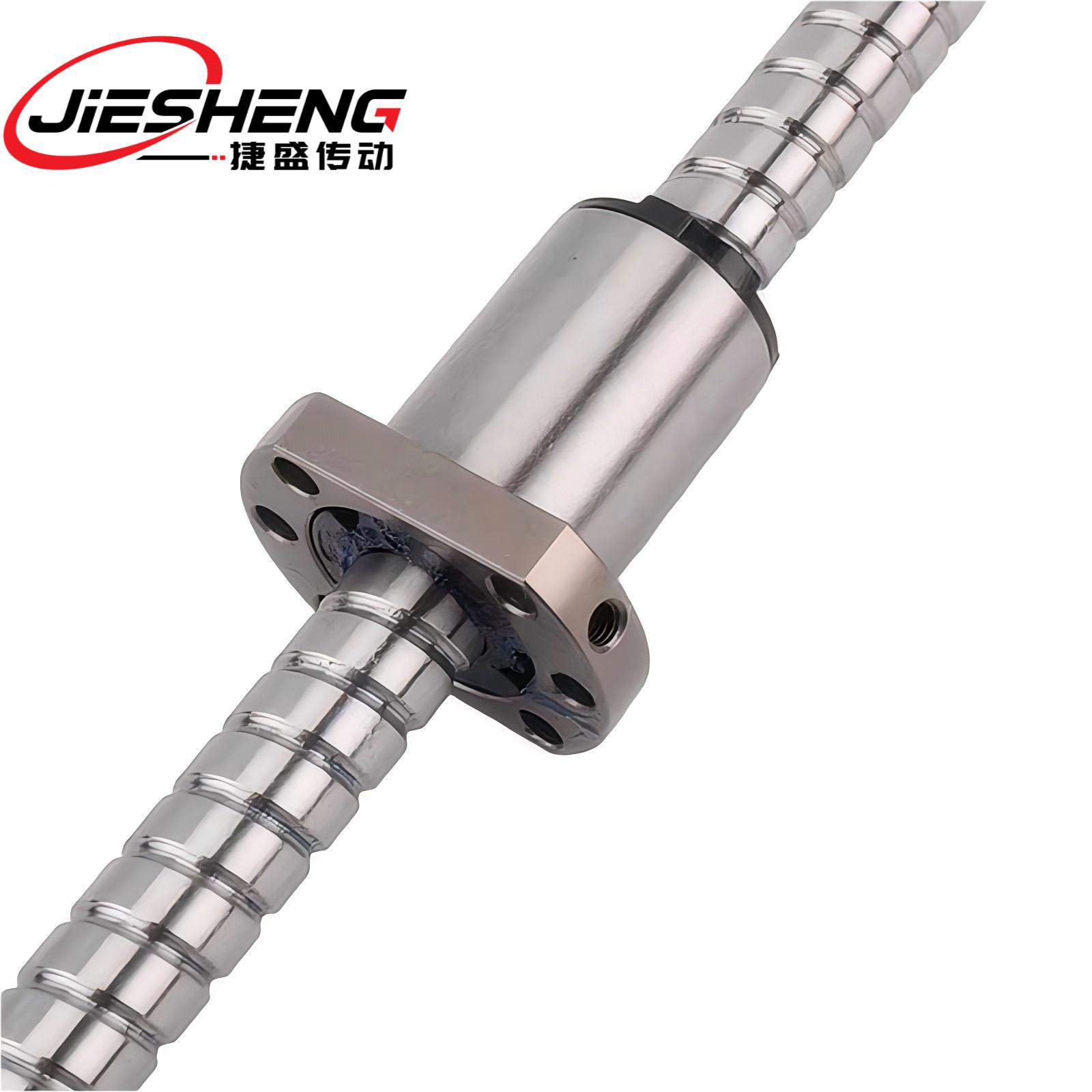
Hey there! As a supplier of Linear Guide Shafts, I often get asked about the weight-bearing capacity of these nifty components. So, I thought I'd take a deep dive into this topic and share some insights with you all.
First off, let's understand what a linear guide shaft is. A Linear Guide Shaft is a key part in linear motion systems. It provides a smooth and accurate path for linear bearings to slide along. These shafts are used in a wide range of applications, from industrial machinery to robotics and even some consumer products.
Now, the weight-bearing capacity of a linear guide shaft isn't a one-size-fits-all kind of thing. It depends on several factors, and we'll break them down one by one.
Material Matters
The material used to make the linear guide shaft plays a huge role in its weight-bearing capacity. Common materials include stainless steel, carbon steel, and chrome-plated steel. Stainless steel is known for its corrosion resistance, which makes it great for applications in harsh environments. However, its weight-bearing capacity might be slightly lower compared to carbon steel. Carbon steel, on the other hand, is strong and can handle heavier loads. Chrome-plated steel combines the strength of steel with a smooth, corrosion-resistant surface.
For example, if you're using a linear guide shaft in a food processing plant, where corrosion is a big concern, stainless steel would be a good choice. But if you're dealing with heavy machinery in a manufacturing setting, carbon steel or chrome-plated steel would likely be more suitable to handle the high loads.
Shaft Diameter
The diameter of the linear guide shaft is another crucial factor. Generally speaking, a larger diameter shaft can support more weight. This is because a wider shaft has a greater cross-sectional area, which distributes the load more evenly. For instance, if you have a small, 6mm diameter shaft, it might be fine for light-duty applications like guiding a small robotic arm. But if you need to support a heavy industrial conveyor, you'd probably want to go for a larger diameter shaft, say 20mm or more.
Length of the Shaft
The length of the shaft also affects its weight-bearing capacity. As the shaft gets longer, it becomes more prone to deflection under load. This means that a long shaft might not be able to support as much weight as a shorter one of the same diameter. To counteract this, you might need to use additional supports or choose a shaft with a higher stiffness.


Bearing Type and Configuration
The type of linear bearings that run on the shaft and their configuration can significantly impact the weight-bearing capacity. Different bearing types have different load ratings. For example, ball bearings are great for high-speed applications but might not be able to handle as much weight as roller bearings. If you're dealing with heavy loads, using multiple bearings in a specific configuration can help distribute the load more evenly and increase the overall weight-bearing capacity.
Calculating the Weight-Bearing Capacity
Now, figuring out the exact weight-bearing capacity of a linear guide shaft isn't always straightforward. There are some standardized formulas and methods available, but they usually require a lot of detailed information about the shaft, bearings, and the application itself.
Most manufacturers, including us, provide load rating charts for our Rail Shaft and Precision Linear Shafts. These charts give you an idea of the maximum load that a particular shaft can handle under specific conditions. However, it's important to note that these are just guidelines. In real-world applications, there are often other factors at play, like vibration, shock loads, and operating temperature.
Real-World Examples
Let's look at a couple of real-world examples to see how these factors come into play.
Example 1: A 3D Printer
In a 3D printer, the linear guide shafts are used to move the print head and the build platform smoothly. These are relatively light-duty applications. A small-diameter (around 8mm) stainless steel shaft would be sufficient to handle the weight of the print head and the small forces involved in the printing process. The length of the shaft is also relatively short, so deflection isn't a major concern.
Example 2: A CNC Machine
A CNC (Computer Numerical Control) machine is a heavy-duty application. It needs to move large cutting tools and workpieces accurately. In this case, a large-diameter (20mm or more) carbon steel or chrome-plated shaft would be required. The shafts might also be longer to accommodate the larger working area of the machine. Multiple roller bearings in a specific configuration would be used to handle the high loads and ensure smooth operation.
Why Choose Our Linear Guide Shafts
As a supplier of linear guide shafts, we take pride in offering high-quality products. Our shafts are made from the best materials, and we use advanced manufacturing processes to ensure precision and durability. We have a wide range of shaft diameters and lengths available, so you can find the perfect fit for your application.
Our load rating charts are based on extensive testing and real-world data. We also offer technical support to help you select the right shaft and bearing combination for your specific needs. Whether you're working on a small DIY project or a large industrial application, we've got you covered.
Let's Talk
If you're in the market for linear guide shafts and want to learn more about their weight-bearing capacity or just need some advice on which products are right for you, don't hesitate to get in touch. We're here to help you make the best decision for your project. Whether you're designing a new machine or upgrading an existing one, our team of experts can provide you with the information and support you need. Just reach out, and we'll start the conversation.
References
- Groover, M. P. (2010). Fundamentals of Modern Manufacturing: Materials, Processes, and Systems. Wiley.
- Shigley, J. E., Mischke, C. R., & Budynas, R. G. (2004). Mechanical Engineering Design. McGraw-Hill.