

How to Seal Nut Housings to Prevent Contamination?
In mechanical assembly and equipment maintenance, many people hold misconceptions about "sealing nut housings to prevent contamination." Some believe that "just wrapping some PTFE tape or adding a seal ring is sufficient," neglecting the importance of matching seals to operating conditions. Others over-seal (e.g., by applying multiple layers of sealing tape), leading to difficulty in nut removal or deformation of the seal due to compression. Others seal only during assembly, ignoring potential seal failure during long-term use. In reality, nut housing sealing requires a closed-loop approach combining "correct sealing method + standardized operation + regular maintenance" based on contamination type (e.g., dust, liquids, corrosive media), operating conditions (e.g., temperature, pressure, vibration), and nut function (e.g., flange fastening, shaft end fixation). This ensures both complete barrier against contaminants and maintains nut disassembly ease with structural integrity.
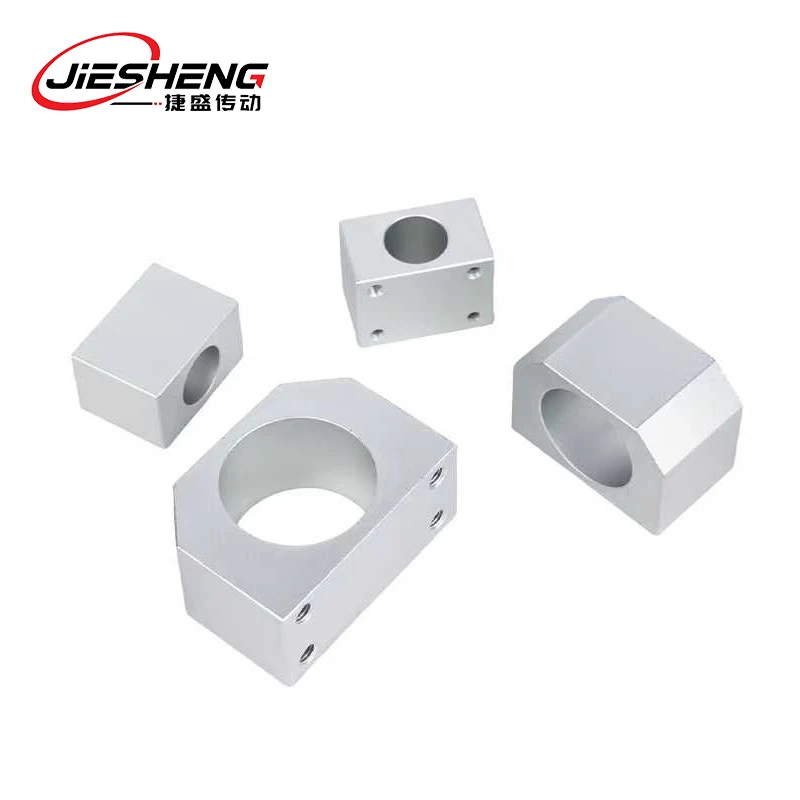
First: Clarify Core Sealing Principles to Avoid Missteps
Before sealing, clarify the core objectives, contamination types, and critical precautions. This forms the foundation for selecting the correct sealing solution and reduces operational errors by 80%.
1. Core Sealing Objective: Block Contamination Without Compromising Functionality
The essence of nut housing sealing is to "prevent dust, liquids, and corrosive media from entering the mating surfaces, thread gaps, and surrounding components of nuts and bolts."
2. Common Contamination Types and Sealing Requirements for Nut Housings
Different contamination types exhibit distinct characteristics, necessitating tailored sealing approaches:
Dust/Particle Contamination: Primarily originating from workshop environments (e.g., metal shavings, wood chips, sand), these contaminants readily clog thread gaps and wear mating surfaces. Sealing must prioritize "physical barrier" (e.g., dust seals, protective caps) to prevent dust ingress. A nut housing on mining equipment, left unsealed, had its thread gaps completely filled with dust within six months. This rendered the nut impossible to disassemble normally, requiring forced removal.
Sealing must emphasize "corrosion-resistant isolation" (e.g., corrosion-resistant sealants, stainless steel seals) while preventing direct metal-to-medium contact.
Second, Sealing Material and Tool Selection: Matching Conditions to Ensure Effective Sealing
Appropriate sealing materials and tools are prerequisites for effective sealing. Precise selection based on contamination type and operating conditions is essential to avoid "sealing failure due to incorrect material selection."
1. Common Sealing Materials and Their Applications
Different sealing materials exhibit distinct properties and must be matched to operating conditions. Core materials fall into four categories:
Sealing Tape (PTFE Tape / Teflon Tape):
Characteristics: Soft texture, wide temperature range (-200°C to 260°C), resistant to most chemical media. Primarily used for thread sealing to fill thread gaps.
Applications: Suitable for ambient temperatures, low pressures, and non-aggressive environments (e.g., water pipe nuts, standard equipment flange nuts), particularly effective for threaded connections.
Sealants (Anaerobic Adhesives / Silicone Sealants / Oil-Resistant Sealants):
Characteristics: Forms elastic or rigid sealing layers upon curing to fill gaps.
Different types suit distinct conditions: anaerobic adhesives (cure in oxygen-deprived environments; ideal for thread sealing, preventing loosening and leakage), silicone adhesives (temperature resistance: -60°C to 200°C; suitable for ambient-temperature waterproof sealing), oil-resistant adhesives (resistant to engine oil/hydraulic fluid; suitable for mechanical hydraulic system nuts).
Applications: Thread gap sealing, contact surface sealing between nuts and connected components, such as motor end cap nuts (anaerobic adhesive), outdoor equipment nuts (silicone adhesive), hydraulic line nuts (oil-resistant adhesive).
2. Essential Sealing Tools: Ensure Proper Operation
Sealing requires specialized tools to prevent irregular seals caused by generic tools:
Cleaning tools: Soft cloth, neutral cleaner (e.g., alcohol) for nut surface cleaning;
Application tools: Caulking gun (for uniform sealant application), small brush (for liquid sealant application to fill fine gaps);
Wrapping tools: Dedicated wrapping tool (for uniform sealing tape tension), scissors (for cutting sealing tape/gaskets to prevent dimensional errors);
Compaction tools: Rubber mallet (for gasket compaction to prevent deformation), wrench (for post-sealing nut tightening to ensure seal-to-nut contact).
Third, Inspection and Maintenance After Sealing: Ensuring Long-Term Contamination Prevention
Sealing is not a "once-and-for-all" solution. Regular inspection and maintenance are required to promptly address seal failures and prevent contaminant ingress.
1. Seal Effectiveness Inspection: 3 Core Indicators
Visual Inspection: Confirm no detachment, deformation, or cracking of sealing components (seal rings, caps); no aging or peeling of sealant; no contaminants adhering to nut housing.
Sealing Performance Test: In liquid environments, conduct a water jet test (direct a high-pressure water jet at 30 cm from the nut for 30 seconds, ensuring no liquid ingress); in corrosive environments, periodically measure medium concentration around the nut (e.g., salt fog concentration) to confirm no medium penetration through the seal.
Disassembly Testing: After sealing, attempt nut disassembly periodically (e.g., every 3 months) to verify sealant residue (e.g., whether sealant is easily removable) and thread integrity, preventing permanent locking.
2. Seal Maintenance Strategy: Establish cycles based on operating conditions
Dust Environments: Inspect dust seals/covers for looseness every 1-2 months. Clean accumulated dust promptly. Replace dust seals every 3 months (to prevent aging).
Liquid Environments: Inspect sealant for cracks and sealing rings for deformation every 2-3 months. Reapply waterproof sealant before rainy seasons to prevent water ingress.
Corrosive Environments:
Monthly inspection of seal cover integrity.
Quarterly corrosion resistance testing of sealant and gaskets; replace immediately if degraded.
Annual complete disassembly to inspect thread corrosion.
Vibration Environments:
Weekly visual inspection for seal displacement.
Monthly torque wrench verification of nut tightness.
Reapply sealant immediately if cracks appear.

Fourth. Common Sealing Misconceptions: Avoid These Errors
1. Misconception 1: Using Standard PTFE Tape for High-Temperature/Corrosive Environments
Standard PTFE tape has a temperature tolerance ≤260°C and limited corrosion resistance. It softens and fails in temperatures >300°C and corrodes in chemical acid/alkali environments, leading to seal failure.
2. Misconception 2: Applying excessive sealant, believing "thick sealant prevents leaks"
Over-application leaves excessive residue after curing, causing thread jamming during disassembly. Excess sealant may also overflow and contaminate surrounding components. Correct practice: Apply thread sealant 0.1-0.2mm thick. For mating surface sealant, apply a single ring to cover the gap without overflowing.
Contact Us
📞 Phone: +86-8613116375959
📧 Email: 741097243@qq.com
🌐 Official website: https://www.automation-js.com/


