

In the fields of precision automation, servo drives, linear modules, and CNC machining equipment, standard simple mounting brackets often suffer from shortcomings such as insufficient rigidity, poor vibration resistance, low positioning accuracy, and significant deformation. These limitations make them unsuitable for the operational characteristics of servo systems, which require high-speed response, closed-loop precision positioning, and high-frequency dynamic load handling. A Servo Motor Holder is a specialized mounting component precision-machined from high-quality alloy base material into a single integrated unit. Designed specifically for servo motors, it ensures precise positioning, rigid mounting, vibration suppression, and coaxial alignment. It effectively mitigates potential operational issues such as motor misalignment, resonance-induced vibration, coaxiality deviations, and degradation of transmission accuracy. Simply put, the Servo Motor Holder serves as the reference mounting base for servo drive systems. It locks the motor's installation orientation through high-precision bores and planar reference surfaces, counteracts dynamic vibrations and stress-induced deformation, and ensures coaxial accuracy between the motor shaft and the transmission mechanism. It is widely used in applications with stringent requirements for installation reference, stability, and positioning accuracy, such as CNC equipment, precision transfer modules, automated workstations, and high-speed servo drives. This article employs professional and rigorous terminology to comprehensively explain the fundamental properties, operating principles, structural materials, operational conditions, and assembly selection specifications of Servo Motor Holders. This facilitates industry professionals in making precise selections and helps avoid issues such as transmission misalignment, resonance and abnormal noise, and premature component failure caused by improper selection.
|
|
Product Highlights
The core characteristics of Servo Motor Holders are high-rigidity reference positioning, shock resistance and vibration damping, high-precision coaxiality assurance, and lightweight yet stable load-bearing capacity. These features represent the fundamental distinction between Servo Motor Holders and ordinary, simple motor brackets. Stripping away redundant industry jargon, we summarize the core advantages into four points, presented in a professional and concise manner for easy understanding and retention:
High-rigidity reference bearing ensures consistent positioning accuracy. Manufactured through integrated precision milling, the structure features uniform stress distribution. The reference plane and mounting holes are precision-toleranced, maintaining a stable motor mounting reference over the long term. This eliminates micro-deformation of the base caused by dynamic load changes, ensuring no degradation in servo closed-loop positioning accuracy.
High-efficiency shock absorption and vibration damping for smoother dynamic operation. The alloy substrate possesses excellent rigidity and damping characteristics, absorbing high-frequency vibrations generated by servo start/stop cycles, rapid direction changes, and high-speed operation. It suppresses resonance transmission and mitigates the impact of vibrations on precision components such as lead screws, couplings, and guide rails, stabilizing the equipment's dynamic operating state.
Precise reference calibration ensures coaxial transmission without deviation. Standardized, high-precision mounting holes and locating shoulders enable precise alignment between the motor shaft and the transmission mechanism, eliminating coaxiality deviations caused by manual assembly errors. This reduces transmission wear, stuttering, and abnormal noise from the source.
Wide adaptability to material and operating conditions, with high assembly compatibility. Mainstream alloy materials combine lightweight design with high strength, offering rust and corrosion resistance along with strong structural stability. They are suitable for industrial environments ranging from ambient temperatures to dusty and humid conditions. The standardized structure accommodates servo motors across various power ranges, ensuring easy installation and strong interchangeability, allowing for rapid adaptation to equipment without the need for customization or modification.
Core Operating Principle
The operational logic of the Servo Motor Holder can be summarized as rigid reference locking, stress distribution, vibration damping, and maintenance of coaxial precision. This principle directly addresses industry pain points, resolving the shortcomings of conventional mounts-such as insufficient rigidity, prone-to-shift reference points, inability to suppress vibration, and uncontrollable precision. Conventional sheet metal welded or simple stamped mount structures lack structural rigidity. They are prone to micro-deformation under load and cannot withstand the high-speed dynamic vibrations of servo motors. Over time, this leads to motor displacement and loss of coaxial alignment, directly resulting in inaccurate servo positioning, abnormal transmission noises, and accelerated component wear.
Operational Process: The Servo Motor Holder provides a fixed installation reference for the equipment through its integrated rigid structure. The motor is securely locked to the mount's reference surface via high-precision flanges and bolt holes. The mount bears the motor's self-weight, the reaction force of the output torque, and dynamic inertial loads, while evenly distributing concentrated stresses to the equipment frame. During servo motor start-up and shutdown, high-speed direction changes, and high-frequency reciprocating operations, the base's rigid damping characteristics absorb high-frequency vibration energy, preventing vibration propagation and resonance. Simultaneously, the precision reference structure locks the motor's axial position, continuously maintaining coaxial alignment accuracy between the motor and the coupler, lead screw, and reducer. This prevents transmission abnormalities caused by deformation and misalignment, ensuring the servo system's positioning accuracy, repeatability, and operational stability.
Compared to ordinary simple mounts, Servo Motor Holders are precision-grade load-bearing components that combine both static load-bearing rigidity and dynamic vibration damping. They are designed to meet the high-precision, high-dynamic, and high-stability operational requirements of servo systems, making them indispensable precision transmission components that cannot be replaced by ordinary mounts. Summary of Core Functions: Reference fixation, rigid load-bearing, vibration and noise suppression, and maintenance of coaxial accuracy. These functions directly determine the positioning stability, transmission smoothness, and service life of precision components in servo equipment, making them fundamental core components for CNC and automated precision transmission systems.
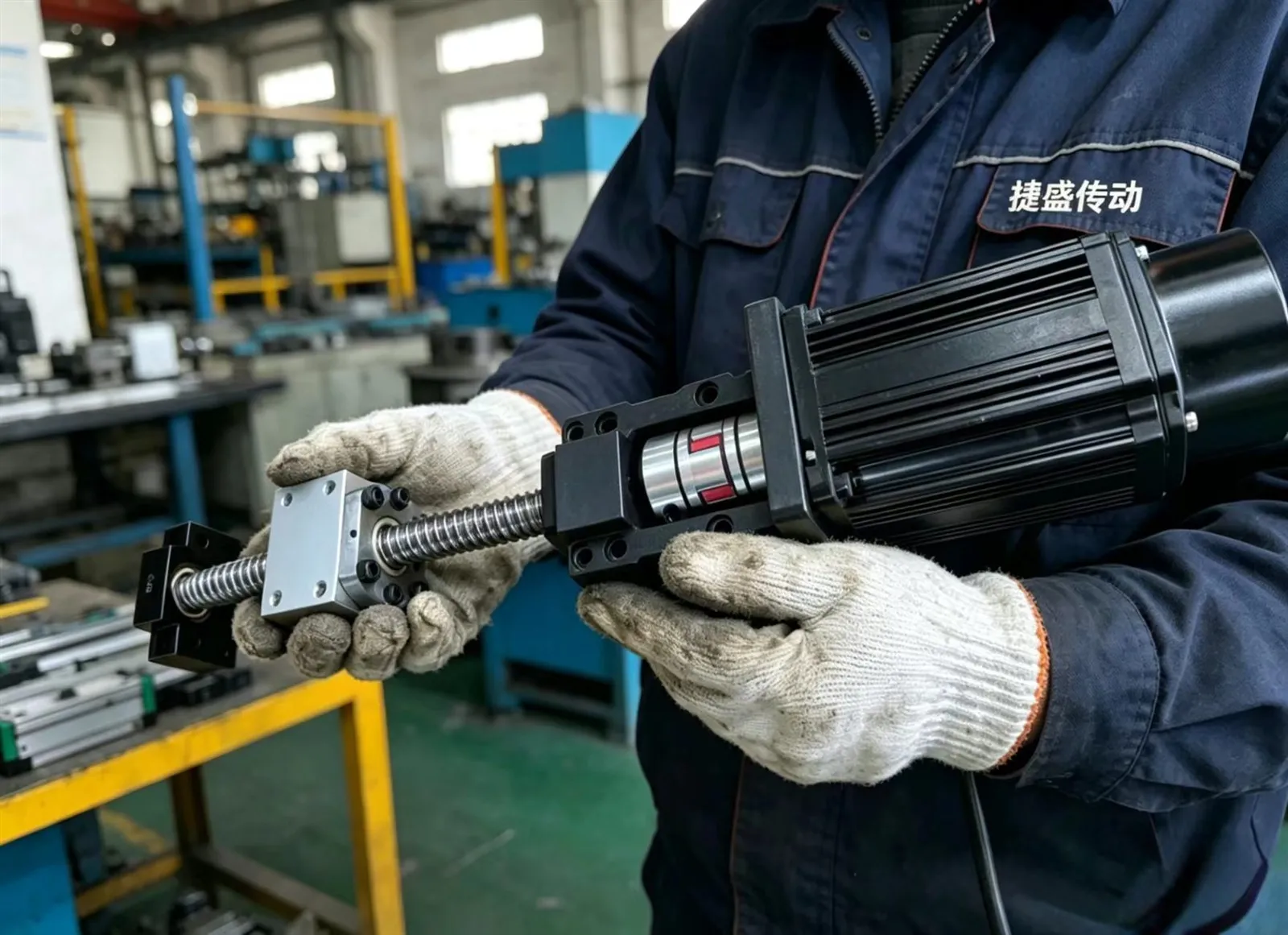
Product Showcase
Product Structure and Materials
The Servo Motor Holder features a neat and compact structural layout. The overall design is centered on reference positioning, rigid load-bearing, vibration suppression, and convenient assembly. It is integrally molded without welding stress and manufactured to strict tolerances. Core components include the mount body, reference mounting surface, motor positioning flange, mounting bolt holes, frame locking holes, and ribbed damping structure. These elements work in concert to ensure precise installation, stable load-bearing, and long-term deformation-free performance. Some high-end precision models can be equipped with additional positioning steps and anti-vibration/anti-slip structures. Detailed information is shown in the table below:
| Structural Component | Brief Introduction | Core Requirements |
| Bracket Base Body | Main load-bearing body and mounting reference, bearing motor dead weight, torque reaction force and dynamic vibration to evenly disperse equipment stress. | Integral forming without residual stress, sufficient rigidity and strong deformation resistance; no distortion or loosening under long-term load with stable reference dimension. |
| Reference Mounting Plane | Fitting reference surface for motor assembly, determining motor installation levelness and parallelism, serving as core guarantee for transmission coaxial accuracy. | Precise flatness tolerance, smooth surface free of deformation and burrs; tight fitting without gap to ensure accurate motor installation posture. |
| Motor Positioning Spigot | Core shaft positioning structure to limit motor mounting position, calibrate motor shaft center and avoid assembly eccentricity deviation. | Accurate roundness and reasonable fitting clearance; fast and accurate positioning without shaft offset or shaking after assembly. |
| Motor Fixing Bolt Hole | Used to fasten servo motors, restrict axial and circumferential displacement and prevent loosening and sliding during operation. | Accurate hole position and standard aperture; uniform locking force, no thread slipping or edge damage after repeated disassembly and assembly. |
| Frame Locking Hole | Realize rigid connection between bracket and equipment frame to fix overall position and avoid bracket vibration and offset. | Reasonable hole layout and balanced locking force; no looseness or micro displacement after fastening to keep stable reference state. |
| Stiffener Damping Structure | Enhance overall rigidity, disperse concentrated stress, improve damping performance to absorb high-frequency vibration and restrain resonance. | Rational stiffener layout with uniform stress transmission; greatly improved rigidity to effectively reduce dynamic vibration amplitude of servo system. |
In addition to the basic structure, brackets designed for high-precision equipment undergo comprehensive stress-relief aging treatment to prevent deformation over time; heavy-duty models feature thickened rib structures to enhance resistance to torsional deformation; and models intended for cleanroom environments undergo anodic sealing treatment to improve dust and rust resistance.
The choice of material directly determines the rigidity, stability, vibration resistance, and environmental adaptability of a Servo Motor Holder. Significant performance differences exist among various base materials, making material selection a core consideration. The characteristics of mainstream materials and their recommended applications are as follows:
6061 Aluminum Alloy: The mainstream base material for precision automation. Through one-piece molding and anodizing, it offers lightweight construction, moderate rigidity, high dimensional accuracy, excellent stress stability, and rust and corrosion resistance. It is suitable for small-to-medium power servo motors, high-speed precision transfer operations, and lightweight automated workstations, providing a balanced combination of cost-effectiveness and precision.
7075 High-Strength Aluminum Alloy: A material specifically designed for high-end precision equipment. It offers superior rigidity, strength, and deformation resistance compared to 6061 aluminum, with extremely low internal stress and exceptional dimensional stability. It is suitable for high-speed, high-precision, and high-response servo systems and is commonly used in CNC equipment, precision testing equipment, and high-end automated production lines.
Cast Iron: Features high rigidity, high damping, and outstanding vibration resistance. With its heavy weight and strong stability, it effectively absorbs low-frequency, heavy-load vibrations. Suitable for high-power servo systems, heavy-duty gantry equipment, heavy-duty machining equipment, and high-load servo drive applications, it eliminates equipment resonance and deformation.
45# Steel / Alloy Steel: A specialized base material for heavy-duty, high-strength applications. It offers exceptional resistance to torsional deformation and impact, with a high structural load capacity. It is suitable for high-torque servo motors, heavy-duty reciprocating equipment, and industrial environments with frequent impact loads, maintaining dimensional stability even under long-term heavy-load operation.
Additionally, stainless steel can be selected for humid or chemically corrosive environments to enhance corrosion resistance and stability. Ordinary thin sheet metal and simple stamped materials have poor rigidity, low reference accuracy, and are prone to deformation; they are only suitable for low-speed, low-precision auxiliary equipment and must never be used in precision servo systems.
Common Applications and Uses
Servo Motor Holders are specifically designed for servo drive applications requiring high-precision positioning, high-speed dynamic operation, and vibration suppression with stable load support. Any precision automation, CNC machining, or linear motion equipment equipped with a servo motor requires a dedicated servo mount to lock the reference and ensure stable operation. These mounts are widely used in fields such as CNC industrial control, automated production lines, precision transplanting, smart equipment, and tooling systems.
CNC machining and precision machine tools are the core application scenarios. Equipment such as engraving machines, fine engraving machines, small machining centers, and CNC slides demand extremely high positioning accuracy and operational smoothness. Leveraging high-rigidity reference surfaces and damping vibration suppression characteristics, Servo Motor Holders stabilize motor operation, suppress high-speed machining resonance, ensure the coaxial accuracy of lead screw drives, effectively improve equipment machining precision and finished product yield, and reduce tool wear.
In the fields of industrial automation and precision handling, linear modules, servo slides, multi-axis handling platforms, and sorting/handling stations feature high-speed start/stop, rapid direction changes, and high-frequency reciprocating operations. Specialized mounts effectively absorb dynamic inertial vibrations, eliminate micro-deformation and displacement of the base, maintain servo repeatability, and ensure precise movements and stable cycle times at automated workstations.
In the fields of intelligent equipment and precision inspection-including vision inspection systems, precision alignment fixtures, and small precision servo drive units-sensitivity to vibration and positional deviation is critical. Servo mounts, with their zero-offset reference positioning and superior vibration damping capabilities, isolate equipment from vibration interference, ensuring inspection and alignment accuracy to meet the demands of high-precision applications.
In the fields of heavy-duty industrial control and heavy machinery-including heavy-duty gantry mechanisms, large-scale transplanting equipment, and high-power servo drive units-operations are characterized by high torque reaction forces and significant load impacts. High-strength cast iron and steel brackets provide rigid load support, distribute concentrated stresses, prevent equipment deformation and resonance-induced noise, and ensure the long-term stable operation of heavy-duty servo systems.
In addition, these brackets are widely compatible with precision servo applications in packaging machinery, printing equipment, electronic automation, and lithium-ion battery and photovoltaic equipment. As essential core components, they maintain the stability of servo system precision, minimize vibration and wear, and extend the service life of transmission components, offering irreplaceable reference assurance value in the field of precision industrial control.
Key Points of Precision Assembly
Servo motor brackets are precision reference-grade load-bearing components with stringent requirements for reference plane and positioning hole accuracy. Rough assembly can easily cause deformation of reference surfaces, damage to holes, and improper contact between surfaces, leading to issues such as motor eccentricity, vibration and noise, and positioning drift. Assembly must strictly adhere to four key principles: reference surface cleanliness, surface contact, coaxial alignment, and uniform tightening. These are standardized into four standard procedures to eliminate precision risks caused by improper assembly at the source.
Preliminary Cleaning and Specification Verification: Thoroughly clean oil, debris, and oxidized burrs from the bracket's reference surfaces, locating flanges, bolt holes, and the frame's mounting surface to prevent misalignment caused by contaminants. Simultaneously verify that the bracket's specifications and mounting holes match the servo motor model, inspect for surface deformation or hole defects, and establish a unified assembly reference.
Reference Surface Alignment and Pre-assembly: Place the bracket flat on the frame's mounting position, ensuring the reference surface is fully flush with the frame's end face to prevent skewing, overhanging, or uneven contact on one side. Initially align the motor with the bracket's flange position, and place the motor gently; avoid violent impacts or forced pressure to prevent deformation or damage to the reference surface.
Even Alignment and Tightening: First, manually fine-tune the motor shaft orientation to ensure the flange is fully seated and the end faces are tightly aligned, with no misalignment or binding. Use a diagonal, step-by-step tightening method to evenly tighten the motor mounting screws and frame locking screws, controlling the tightening torque to prevent planar deformation and shaft eccentricity caused by excessive tightening on one side.
Post-assembly closed-loop verification: Manually rotate the transmission mechanism to verify smooth operation without stuttering or eccentric wobble; conduct a low-speed jog test of the equipment. If there is no abnormal vibration, high-frequency noise, or positioning drift, the assembly is deemed. Once the reference plane stability and coaxiality meet standards, the system may be put into normal operation.
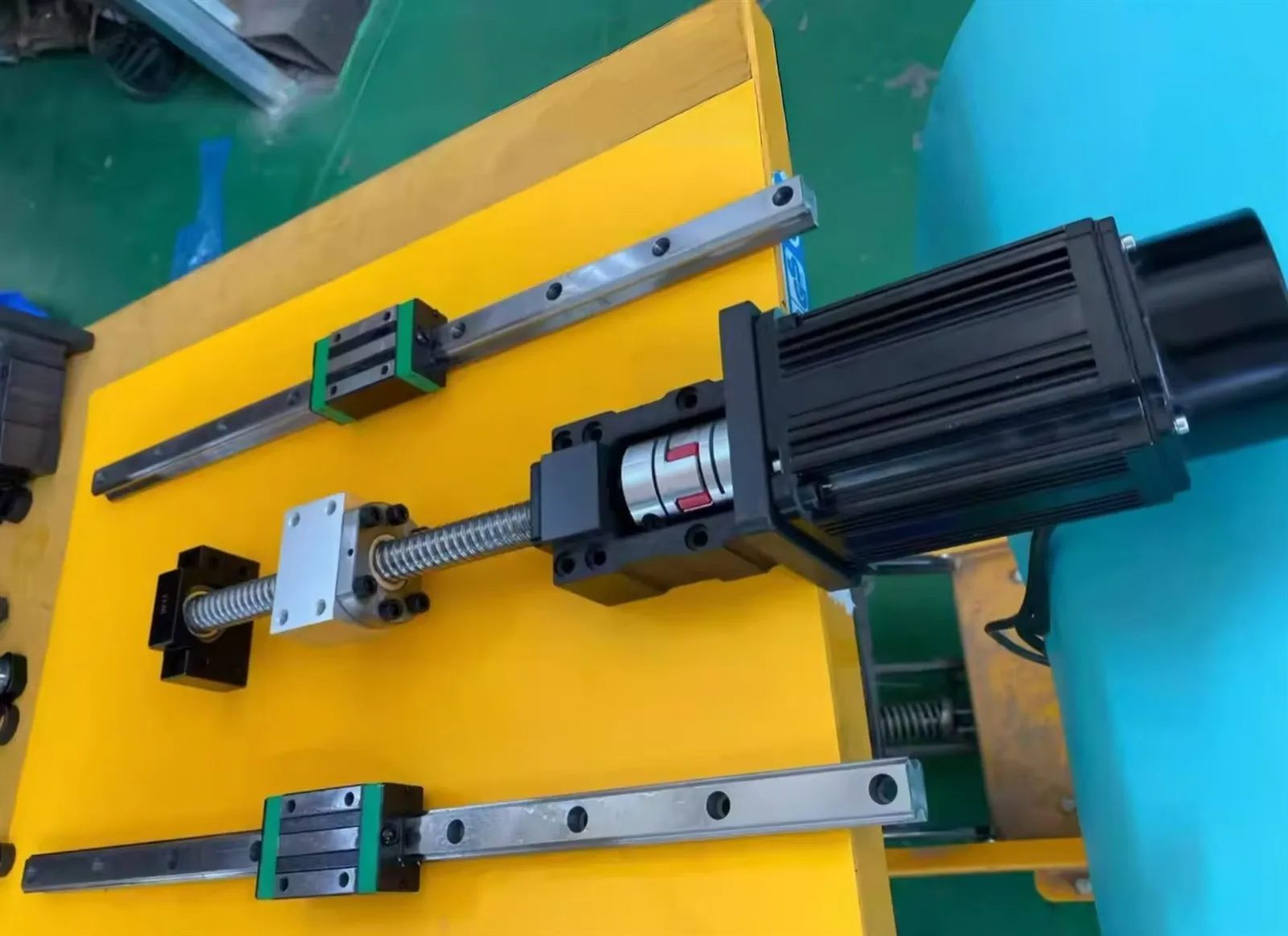
Real-life product applications
Frequently Asked Questions (FAQ)
|
During the selection, assembly, and operation and maintenance of servo motor mounts, issues such as insufficient rigidity, excessive vibration, positioning drift, and assembly backlash often arise. Based on actual on-site conditions, we have compiled eight frequently encountered practical issues along with professional solutions to facilitate daily selection and troubleshooting: Q: Is the poor positioning accuracy and high repeatability deviation of servo equipment related to the mount? A: Highly so. Insufficient rigidity in standard mounts-leading to micro-deformation under load, assembly backlash, and reference offset-can directly cause servo positioning drift and repeated accuracy deviations. Replacing these with high-rigidity precision mounts and ensuring proper assembly can effectively resolve accuracy issues.
Q: The equipment exhibits significant vibration and noticeable abnormal noises during high-speed operation. How can I determine if this is a bracket issue? A: If the coupler, lead screw, and bearings show no damage and are properly aligned, yet high-frequency vibration and resonance-induced noises persist, this is typically caused by insufficient bracket rigidity, weak vibration damping, or loose assembly. Replacing the bracket with a high-damping, rigid model and re-aligning and securing it properly is necessary.
Q: For high-speed precision servo applications, which bracket material should be prioritized? A: For high-speed, precision, and lightweight applications, 7075 aluminum alloy brackets are preferred due to their stable reference surfaces, minimal deformation, and excellent precision retention. For heavy-load, high-frequency applications, cast iron or alloy steel materials are recommended for superior vibration damping and load-bearing stability.
Q: Does tightening the screws more firmly during servo bracket assembly result in higher precision? A: No. Excessive tightening on one side can cause the bracket surface to warp, the reference plane to deform, and the motor shaft to become eccentric, which actually exacerbates vibration and misalignment. Instead, tighten the screws diagonally in stages with uniform force and use standard torque values to ensure the reference plane remains flat and undistorted.
Q: How should brackets be selected and protected in humid or dusty environments? A: Prioritize anodized aluminum alloy brackets, which offer dust and rust resistance and strong adaptability. For highly humid or corrosive environments, stainless steel materials can be selected to prevent precision failure of mating surfaces caused by oxidation and rust.
Q: Can a bracket still be used if it has slight deformation or a small clearance at the mating surface? A: Continued use is not recommended. Minor deformation can cause the motor mounting reference to shift and result in out-of-tolerance coaxiality. Long-term operation will accelerate wear on the coupling and lead screw, leading to vibration, abnormal noise, and a decline in precision. The precision reference bracket must be replaced promptly.
Q: Can brackets with different structures be used interchangeably for servo motors of the same power rating? A: Interchangeability should not be assumed. Differences in hole specifications, flange dimensions, mounting height, and structural rigidity directly alter the shaft reference and stress conditions. Brackets must be strictly matched to the motor model, mounting dimensions, and load conditions.
Q: Do I need to select a special model for automation equipment that undergoes frequent start-stop cycles? A: Frequent start-stop cycles result in high dynamic loads and strong inertial impacts. You must select a high-rigidity bracket with reinforcing ribs to enhance stress distribution and damping capabilities, thereby preventing reference point loosening and micro-deformation caused by long-term dynamic loads. |
References
General Specifications for the Design and Assembly of Precision Mounting Brackets for Servo Motors. China Machinery Industry Standards Service Network
Technical Manual for Selecting Reference Support Structures for Motors in Automation Equipment. Chinese Society of Mechanical Engineers
Guidelines for Servo System Base Stability and Vibration Suppression. CNC Technology Network
Key Points on Material Properties and Operational Applications of Precision Motor Mounts. Industrial Control Network
Technical Documentation on Precision Inspection and Selection of Servo Mounting Reference Components. Misumi Official Technical Documentation
Contact Us
📧 Email: lsjiesheng@gmail.com
🌐 Official website: https://www.automation-js.com/


