

What is the noise level of linear guides during operation?
Hey! We often get asked: "Is the linear guide noisy when running? How loud is it exactly?" Many either assume "it's normal for guides to make noise, no need to worry," only to find equipment noise exceeds standards and disrupts the work environment; or they think "all linear guides are equally noisy, so any choice will do," only to discover the noise far exceeds expectations after purchase. In reality, linear guide noise levels aren't fixed-they vary based on material, structure, installation, and operating conditions, ranging from a few decibels to several dozen. Incorrect selection or improper use not only creates annoyance but may also signal potential wear issues. Today, let's thoroughly discuss typical noise ranges during linear guide operation, key factors affecting noise levels, and how to select and use guides for quieter performance.
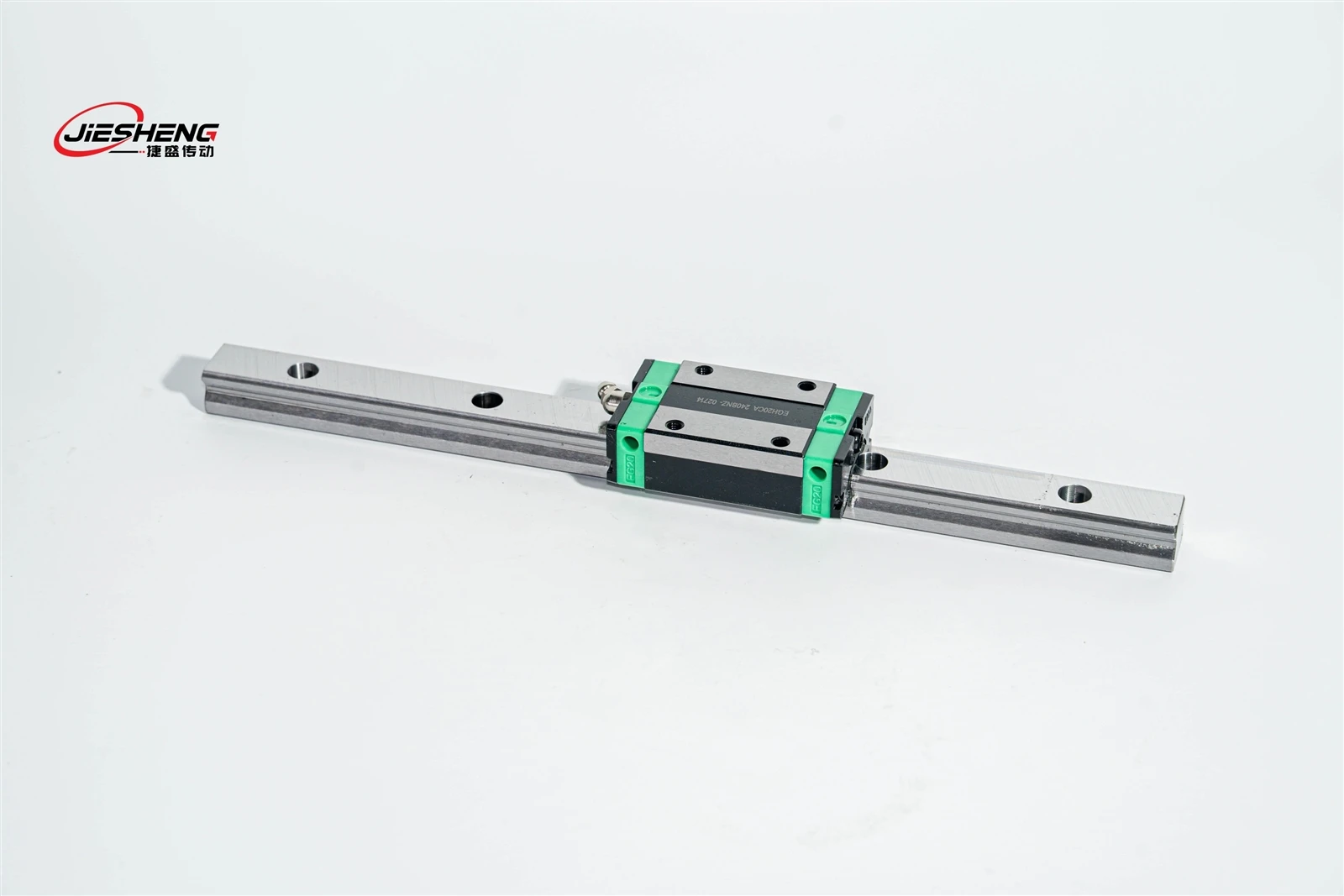
First, let's clarify: What is the "normal noise range" for linear guides?
1. Standard industrial-grade guides (C5-C7 class, e.g., conveyor lines, general machine tools)
These guides prioritize practicality and tend to be relatively louder, with operating noise typically between 55-70dB. For example, a C7-grade conveyor belt guide in a workshop produces about 65dB noise at a slider speed of 100mm/s-roughly equivalent to normal conversation. This level blends into the workshop environment (already filled with other equipment noise) without standing out. However, using such a guide in a quiet laboratory would feel noticeably loud.
Note that if standard rails suddenly exceed 75dB, it may indicate issues-such as worn balls in the slider, insufficient lubrication, or excessive parallelism deviation during installation-requiring immediate inspection.
2. Precision-grade rails (C3-C4 class, e.g., CNC grinding machines, medical equipment)
These rails demand high precision and stability, with stricter noise control requirements. Operating noise typically ranges from 45-55dB. For example, diagnostic equipment guides in hospitals, with C3 precision, produce only 48dB noise during low-speed slider movement (20mm/s)-quieter than a library environment, ensuring no disruption to medical staff operations or patient rest. Even at high speeds (200mm/s), noise remains below 53dB, meeting the silent operation requirements of precision equipment.
Second, what factors increase linear guide noise? Avoid these "noise sources"
Linear guide noise doesn't occur spontaneously-it often stems from material, structure, or improper use. Common "noise sources" include:
1. Material and machining precision: Rough surfaces generate noise through friction
Surface roughness: If the contact surfaces of the guide rail and slider are rough (Ra > 1.6μm), friction noise occurs when balls roll over them. For example, ordinary carbon steel rails without precision grinding have pitted surfaces, producing noise 10-15dB higher than precision-ground rails (Ra ≤ 0.8μm). One customer experienced noise levels of 78dB with rough-surfaced rails, which dropped to 62dB after switching to precision-ground rails-a significant improvement.
Ball Precision: If the balls inside the slider have significant roundness errors (>0.001mm), they will "bounce" during rolling, generating vibration noise. For example, guides using standard-grade balls (precision grade G10) produce 8-10dB more noise than those with high-precision balls (G5 grade), and their service life is also shorter.
2. Structural Design: Unoptimized structures can "amplify noise"
Noise-reduction features: Standard rails have balls in direct contact with the rail, facilitating noise transmission. Noise-reduction rails incorporate a "ball retainer" (e.g., resin-based retainer) to isolate ball collisions and reduce friction contact area between balls and rail, lowering noise by 15-20dB. An electronic device originally using non-caged rails produced 65dB noise. After switching to rails with silent retainers, noise dropped to 48dB.
Seal Design: Hard seals (e.g., standard rubber seals) on sliders generate "scraping sounds" due to friction against the rail surface during movement. Soft seals (e.g., polyurethane seals) minimize friction, reducing noise by 5-8dB. Some customers reported "squeaky scraping noises" from rails, which were resolved by switching to soft seals.
3. Installation and Usage: Improper operation can introduce "additional noise"
Parallelism Deviation: If parallelism is poor during rail installation (>0.1mm/m), the slider will move crookedly. Uneven force on the balls causes noise to suddenly increase by 10-20dB and accelerates wear. In one workshop, failure to calibrate parallelism during installation caused noise levels to reach 80dB. After adjustment with a laser level (parallelism ≤0.05mm/m), noise dropped to 65dB.
Excessive operating speed: When the slider exceeds the rated speed (e.g., over 500mm/s for standard rails), increased centrifugal force on the balls intensifies impact on the rails. Noise escalates proportionally with speed-a 100mm/s increase may raise noise by 3-5dB.
Third, How to Select and Use: Making Linear Guides Quieter?
To achieve quieter linear guide operation, the key lies in "selecting the right model" and "using the right method"-quiet operation can be achieved without high costs:
1. Selecting Guides: Choose Types Based on Noise Requirements
For standard workshops: Opt for C5 precision-ground guides with resin retainers and polyurethane seals. Noise stays below 60dB, costing 30% less than dedicated silent guides while fully meeting workshop requirements.
Precision equipment applications: Opt directly for dedicated silent guides (e.g., models labeled "silent type" or "low noise") paired with G5-grade balls. This reduces noise below 50dB. Though slightly more expensive, it prevents future noise issues.
Ultra-quiet scenarios: Beyond silent rails, consider "fully enclosed structure" rails (with external dust covers) to reduce noise by an additional 5-8dB. Ideal for noise-sensitive environments like semiconductor facilities and laboratories.
2. During Installation: Ensure "Precision Control"
Calibrate Parallelism: Use a laser interferometer or level to calibrate guide rail parallelism, ensuring ≤0.05mm/m.
Secure Fastening: Tighten guide rail mounting bolts to rated torque (e.g., M6 bolts at 8-10 N·m). Avoid over-loosening (causing vibration) or over-tightening (causing deformation). Deformation leads to rough slider movement and increased noise.

Fourth, Common Misconceptions: Don't Be Misled by These "Noise Perceptions"
1. Misconception 1: "Quieter rails must be more precise"
Not necessarily! Some standard rails can achieve precision-grade noise levels with silent retainers, yet remain C5-grade in accuracy. Using them in high-precision equipment (e.g., CNC grinders) will still cause positioning errors. Noise is only a reference-select precision based on actual requirements.
2. Misconception 2: "High noise from new rails is normal"
New guide rails should operate within normal noise ranges (e.g., C5 grade: 55-70dB). If noise exceeds 75dB immediately after installation, there's definitely an issue-either significant installation deviation or inherent quality problems (like poor ball precision). Don't assume "it'll get better with use"; increased wear will only worsen noise over time.
3. Misconception 3: "Adding soundproofing foam solves noise issues"
Soundproofing foam only blocks some external noise transmission. If the guide rail itself is noisy (e.g., due to wear or improper installation), foam won't address the root cause. It may mask the fault, accelerating rail damage. First eliminate the noise source at the rail itself, then consider soundproofing.
Contact Us
📞 Phone: +86-8613116375959
📧 Email: 741097243@qq.com
🌐 Official website: https://www.automation-js.com/


