


Hey there! As a supplier of rail shafts, I've seen firsthand how the surface finish of these components can have a huge impact on their performance. In this blog, I'm gonna break down why surface finish matters, how it affects different aspects of a rail shaft's operation, and why you should pay close attention to it when you're in the market for these parts.
What is Surface Finish?
Before we dive into how surface finish affects performance, let's quickly go over what it actually means. Surface finish refers to the texture or smoothness of a material's surface. It's typically measured in terms of roughness or waviness, and it plays a crucial role in how a rail shaft interacts with other components in a linear motion system.
Impact on Friction and Wear
One of the most significant ways surface finish affects a rail shaft's performance is by influencing friction and wear. A smoother surface finish generally means less friction between the shaft and the moving parts that slide along it. This reduction in friction has several benefits.
Firstly, it improves the efficiency of the linear motion system. When there's less friction, less energy is wasted in overcoming the resistance between the shaft and the sliding elements. This can lead to lower energy consumption, which is not only better for the environment but can also save you money on your electricity bills in the long run.
Secondly, reduced friction means less wear and tear on the shaft and the mating components. Over time, excessive friction can cause the surfaces to abrade, leading to premature failure of the system. By choosing a rail shaft with a high-quality surface finish, you can extend the lifespan of your linear motion equipment and reduce the need for frequent replacements.
For example, our Chrome Plated Linear Shaft is designed with a smooth, chrome-plated surface that offers excellent wear resistance. The chrome plating not only enhances the surface finish but also provides a protective layer that helps prevent corrosion, further improving the shaft's durability.
Influence on Load Capacity
The surface finish of a rail shaft can also affect its load capacity. A rough or uneven surface can cause stress concentrations when a load is applied, which can reduce the shaft's ability to withstand heavy loads. On the other hand, a smooth surface distributes the load more evenly, allowing the shaft to handle higher loads without deformation or failure.
When choosing a rail shaft for your application, it's important to consider the load requirements. If you're dealing with heavy loads, opt for a shaft with a fine surface finish. Our Precision Linear Shafts are manufactured to extremely tight tolerances and have a smooth surface finish, making them ideal for high-load applications.
Effects on Noise and Vibration
Another area where surface finish makes a difference is in noise and vibration levels. A rough surface can cause uneven movement, leading to increased noise and vibration during operation. This can be a major problem in applications where quiet operation is essential, such as in medical equipment or high-precision machining.
By contrast, a smooth surface finish allows for smoother, more consistent movement, which reduces noise and vibration. This not only improves the overall user experience but also helps to minimize the risk of damage to the system due to excessive vibration.
Our Linear Guide Shaft is engineered to provide a quiet and smooth operation. The carefully controlled surface finish ensures that the shaft moves smoothly within the guide, reducing noise and vibration to a minimum.
Considerations for Different Applications
Different applications have different requirements when it comes to surface finish. For example, in applications where precision is the top priority, such as in semiconductor manufacturing or optical equipment, a super-smooth surface finish is essential. Even the slightest irregularities on the shaft's surface can affect the accuracy of the movement, leading to errors in the final product.
On the other hand, in less demanding applications, such as in some types of conveyor systems, a slightly rougher surface finish may be acceptable. However, it's still important to ensure that the surface finish is within the acceptable range to avoid excessive wear and noise.
How We Ensure Quality Surface Finish
At our company, we take surface finish seriously. We use state-of-the-art manufacturing processes and equipment to ensure that our rail shafts have the highest quality surface finish. Our manufacturing facilities are equipped with precision grinding machines and polishing equipment that can produce shafts with extremely smooth surfaces.

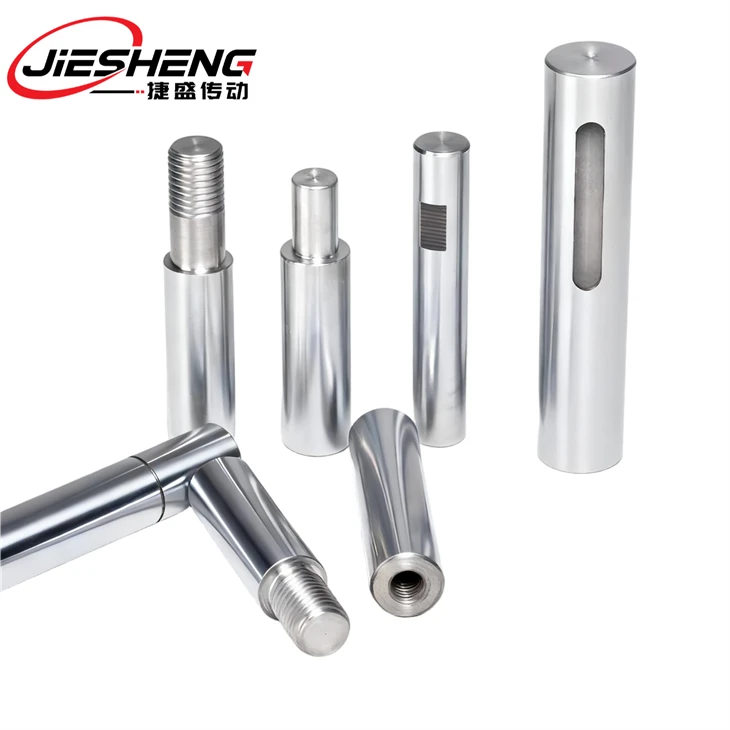
We also have a rigorous quality control process in place to ensure that every shaft meets our strict standards. Each shaft is carefully inspected for surface roughness, waviness, and other parameters to ensure that it performs as expected.
Conclusion
So, as you can see, the surface finish of a rail shaft has a profound impact on its performance. From reducing friction and wear to improving load capacity and minimizing noise and vibration, a high-quality surface finish is essential for the optimal operation of a linear motion system.
If you're in the market for rail shafts, don't overlook the importance of surface finish. Choose a supplier who understands the significance of this factor and can provide you with high-quality products. We're here to help you find the right rail shafts for your application. Whether you're looking for a Chrome Plated Linear Shaft, Precision Linear Shafts, or Linear Guide Shaft, we've got you covered. Contact us today to discuss your requirements and let's get your project moving smoothly!
References
- "Engineering Tribology" by Michael J. Neale
- "Mechanical Design Handbook" by Robert C. Juvinall and Kurt M. Marshek


