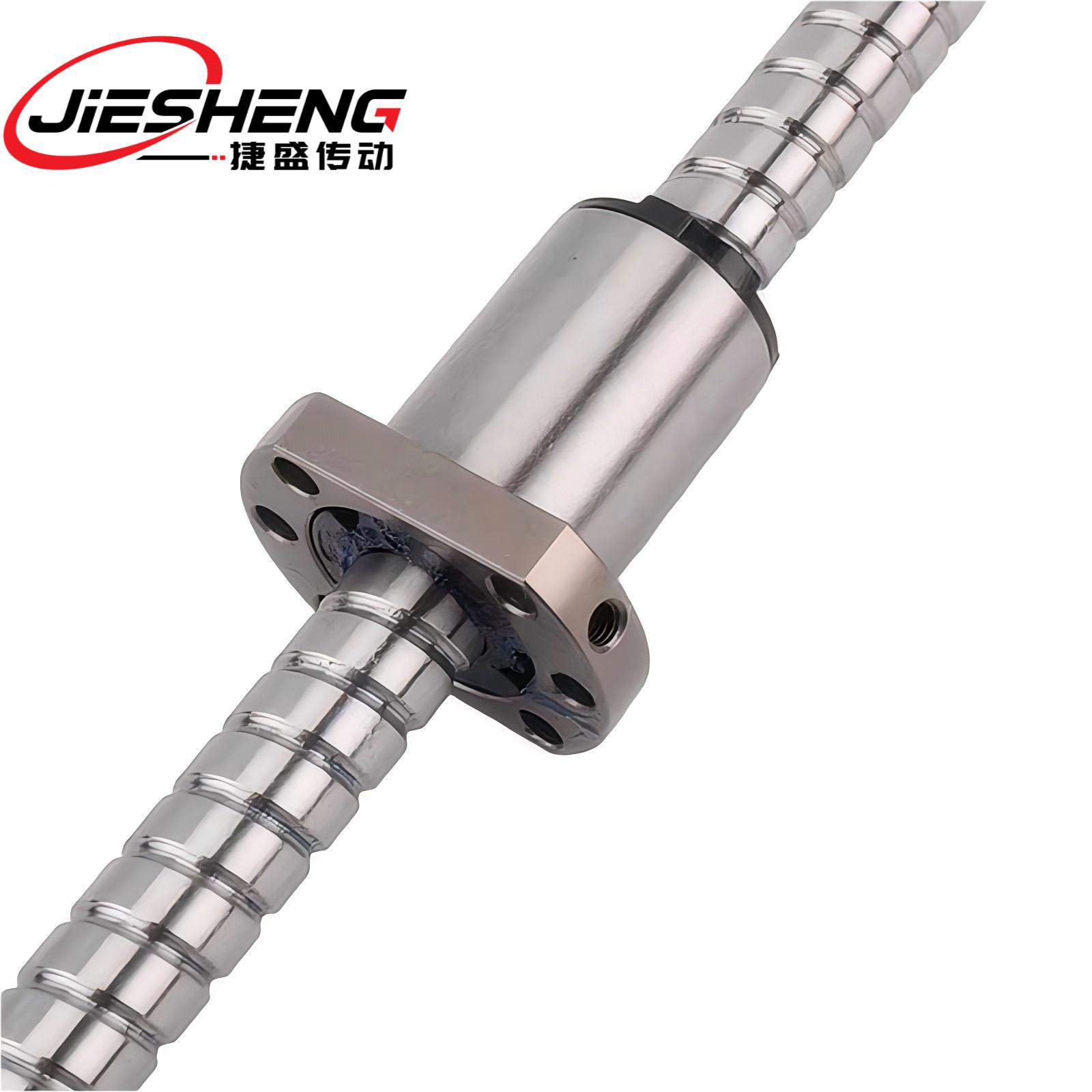
As a supplier of SFU Ball Screws, I've had the privilege of witnessing firsthand the remarkable performance and versatility these components offer across various industries. SFU ball screws are widely recognized for their efficiency, precision, and reliability, making them a popular choice for applications where accurate linear motion is required. However, like any mechanical system, they have certain limitations, especially when it comes to high-speed operation. In this blog post, I'll delve into the key factors that restrict the high-speed usage of SFU ball screws and suggest potential solutions to mitigate these challenges.
Heat Generation
One of the primary limitations of running SFU ball screws at high speeds is heat generation. As the screw rotates, the rolling elements inside the nut experience friction against the ball grooves. At low to moderate speeds, this friction is manageable, and the heat dissipates relatively quickly. But as the speed increases, the frictional forces intensify, leading to a significant rise in temperature.
Excessive heat can cause several problems. First, it can lead to thermal expansion of the ball screw and nut components. This expansion can alter the preload and clearance within the system, resulting in reduced accuracy and increased wear. Second, high temperatures can degrade the lubricant, reducing its effectiveness in reducing friction and protecting the components from corrosion. Over time, this can lead to premature failure of the ball screw.
To address heat generation, proper lubrication is crucial. Special high-temperature lubricants designed for ball screw applications can withstand the elevated temperatures and maintain their lubricating properties. Additionally, implementing cooling mechanisms such as fans or liquid coolant systems can help dissipate heat and keep the operating temperature within an acceptable range.
Critical Speed
Another significant limitation is the critical speed of the ball screw. The critical speed is the rotational speed at which the screw starts to vibrate excessively due to its natural frequency. When the operating speed approaches or exceeds the critical speed, the vibrations can cause noise, reduced accuracy, and even damage to the ball screw and the associated machinery.


The critical speed of an SFU ball screw depends on several factors, including the screw diameter, length, and end support conditions. Longer and thinner screws generally have lower critical speeds compared to shorter and thicker ones. To operate the ball screw at high speeds safely, it's essential to ensure that the operating speed is well below the critical speed.
In some cases, it may be possible to increase the critical speed by modifying the end support conditions. For example, using fixed-fixed end supports can provide greater stiffness and increase the critical speed compared to simple supported or cantilevered supports. However, this approach may not always be feasible due to space constraints or other design considerations.
Ball Circulation and Fatigue
At high speeds, the balls inside the nut need to circulate smoothly to maintain proper operation. However, as the speed increases, the balls may experience higher centrifugal forces, which can disrupt their normal circulation pattern. This can lead to uneven loading on the balls and races, causing premature wear and fatigue.
In addition, the high-speed operation can subject the balls and races to repeated stress cycles, increasing the risk of fatigue failure. Fatigue failure occurs when the material weakens over time due to the accumulation of small cracks, eventually leading to component failure.
To improve ball circulation and reduce the risk of fatigue, manufacturers often use advanced ball nut designs, such as recirculating ball nuts with optimized ball paths. These designs help ensure smooth ball circulation and distribute the load more evenly across the balls and races. Additionally, using high-quality materials with good fatigue resistance can extend the service life of the ball screw.
Noise and Vibration
High-speed operation of SFU ball screws can also generate significant noise and vibration. The noise is primarily caused by the impact and friction between the balls and the races, as well as the vibrations of the screw itself. Excessive noise and vibration not only create an unpleasant working environment but can also affect the performance and accuracy of the machine.
To reduce noise and vibration, it's important to select the right ball screw and nut combination for the application. Opting for ball screws with a higher lead accuracy and smoother surface finish can help minimize the noise and vibration levels. Additionally, using vibration-damping materials or mounting the ball screw on vibration isolation pads can further reduce the transmission of vibrations to the surrounding structure.
Backlash and Accuracy
As the speed of the ball screw increases, the backlash within the system can become more pronounced. Backlash refers to the relative motion between the screw and the nut when the direction of motion is reversed. It can cause inaccuracies in positioning and reduce the overall performance of the machine.
To minimize backlash at high speeds, preloading the ball screw is often necessary. Preloading involves applying an initial force to the ball screw and nut assembly to eliminate the clearance between the balls and the races. This helps ensure that there is no relative motion between the screw and the nut when the direction of motion is reversed, improving the accuracy and repeatability of the system.
However, preloading also has its limitations. Excessive preloading can increase the frictional forces and heat generation, reducing the efficiency and service life of the ball screw. Therefore, it's important to find the right balance between preloading and the other performance requirements of the application.
Conclusion
While SFU ball screws offer many advantages for linear motion applications, they do have certain limitations when it comes to high-speed operation. Heat generation, critical speed, ball circulation and fatigue, noise and vibration, and backlash and accuracy are some of the key factors that need to be considered when using SFU ball screws at high speeds.
As a supplier of SFU Ball Screws, we understand the importance of addressing these limitations to ensure the optimal performance and reliability of our products. By working closely with our customers and providing them with the right solutions and technical support, we can help them overcome these challenges and achieve their high-speed application requirements.
If you're considering using SFU ball screws in your high-speed application or have any questions about their limitations and solutions, we'd love to hear from you. Contact us to start a discussion about your specific needs and explore how our SFU Ball Screws, Micro Ball Screw, or Stainless Steel Lead Screw products can meet your requirements.
References
- Bosch Rexroth, "Ball Screw Drives - Technical Guide."
- THK Co., Ltd., "Ball Screws: Design and Selection."
- NSK Ltd., "Linear Motion Technology Handbook."