

Do you need special tools to install nut retainers?
In mechanical assembly workshops or equipment maintenance sites, engineers often face such dilemmas: "Why do nut retainers keep misaligning when installed by hand? Is there a tool I'm missing?" "After using regular pliers to install nut retainers on precision equipment, the accuracy falls short-what tool should I use?" Such installation challenges fundamentally stem from insufficient understanding of tool compatibility for nut retainer installation.
In reality, whether special tools are required for installing nut retainers isn't an absolute answer. It depends on evaluating the "retainer type (plastic/metal), installation scenario (general/precision), and accuracy requirements (coaxiality, perpendicularity)."
In reality, whether special tools are required for nut retainer installation isn't an absolute answer. It depends on a comprehensive assessment of "retainer type (plastic/metal), installation scenario (general/precision), and accuracy requirements (coaxiality, perpendicularity)." Standard plastic retainers may be installed with common tools like screwdrivers or pliers. However, precision metal retainers demand strict adherence to coaxiality and installation force specifications, necessitating specialized tools. Failure to use proper tools risks damaging the retainer or compromising dimensional accuracy. Today, we systematically dissect nut retainer installation tools to help you establish a "tool selection based on requirements, precise installation" system, preventing assembly failures caused by improper tools.
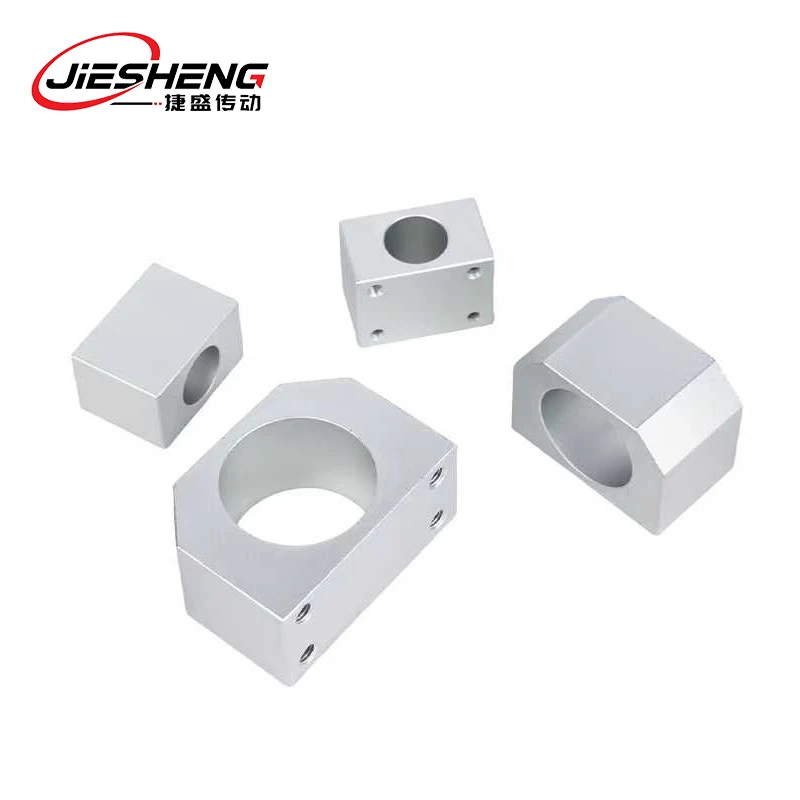
First, clarify: The core function and installation requirements of nut retainers - the fundamental basis for tool selection.
To determine if specialized tools are needed, first understand the function and critical installation requirements of nut retainers. These requirements directly dictate tool precision and operating methods:
Core Function: The primary purpose of a nut retainer (also known as a nut separator or ball retainer) is to "fix nut position, isolate adjacent nuts, and guide ball movement." In components like ball screws and linear bearings, the retainer must ensure coaxial alignment between the nut and screw (coaxiality ≤ 0.02mm) to prevent ball jamming caused by nut misalignment. In multi-nut assemblies, the retainer must evenly space nuts (spacing deviation ≤0.1mm) to guarantee balanced force distribution.
Core Installation Requirements:
Precision Requirements: Coaxiality between retainer and nut ≤0.02mm (≤0.01mm for precision applications), perpendicularity ≤0.01mm/m, preventing transmission stuttering due to installation misalignment;
Force Requirements: Apply uniform pressure during installation to avoid retainer deformation from excessive force;
Positioning Requirements: The retainer must be precisely positioned within the nut's installation groove (groove deviation ≤0.05mm), free of offset or tilt, to ensure smooth ball rolling.
These three requirements dictate that installation tools must possess "precision control, force adjustment, and positioning guidance" capabilities. If standard tools cannot meet these requirements, specialized tools must be used.
Second, scenarios requiring no specialized tools: Installation of standard nut retainers
In the following two scenarios, the nut retainer structure is simple with low precision requirements.
1. Scenario 1: Plastic, low-precision nut retainers
Retainer characteristics:
Structure: Simple snap-fit or insert-type designs without complex positioning mechanisms;
Suitable General-Purpose Tools:
Flathead Screwdriver / Phillips Screwdriver: Used to pry or press the retainer's snap-fit mechanism, assisting in snapping it into the installation slot;
Installation Process:
Clean the nut mounting slot;
Manually align the retainer with the mounting slot for initial positioning;
Shake the retainer by hand-no looseness or misalignment indicates proper installation.
2. Scenario 2: Large-Size, Low-Load Metal Nut Retainers
Retainer Characteristics:
Structure: Bolt-fixed or welded;
Applicable General Tools:
Wrench (open-end wrench, box-end wrench): For tightening retainer fixing bolts;
Tape measure / Ruler: For measuring retainer installation position;
Level (accuracy 0.02mm/m): For calibrating retainer levelness to prevent tilt (for horizontally installed retainers).

Third. Scenarios Requiring Specialized Tools: Precision Nut Retainer Installation
In the following 2 scenarios, nut retainers demand high precision and complex installation. General tools cannot meet accuracy and force control requirements, necessitating specialized tools to prevent installation failure:
1. Scenario 1: Micro Nut Retainer
Retainer Characteristics:
Essential Specialized Tools:
Specialized micro retainer gripping tools (vacuum suction pen / anti-static tweezers):
Vacuum suction pen: Adheres to retainers via negative pressure (adjustable suction force 5-10N), preventing contamination or damage from manual handling; suitable for plastic/metal micro retainers.
Function: Assists in observing alignment between retainer and mounting slot to ensure precise positioning (deviation ≤0.005mm);
Installation Procedure:
Under microscope, use vacuum pen to lift retainer and align with nut mounting slot;
Slowly release vacuum to position retainer onto slot;
Gently press retainer with micro-pusher (≤2mm diameter, ≤5N force) to ensure full seating;
Inspect installation position under microscope-no offset indicates successful placement.
2. Scenario 2: Interference-fit Metal Nut Retainer
Retainer Characteristics:
Fit Type: Interference fit requiring heating or pressure for installation, with extremely high precision requirements (concentricity ≤ 0.005mm);
Risks: Lack of specialized tools may cause retainer deformation, cracking, or nut damage;
Essential Specialized Tools:
Induction Heating Tool (Micro Induction Heater):
Function: Provides localized heating to the retainer;
Installation Procedure:
Heat the retainer using an induction heating tool;
Quickly align the retainer with the nut mounting groove;
Activate the micro hydraulic press to apply 150N pressure at 5mm/min, pressing the retainer into the groove;
Allow natural cooling to room temperature, then inspect concentricity and perpendicularity with a dial indicator. Acceptance is granted upon meeting specifications.
Fourth: Common Pitfalls and Precautions for Nut Retainer Installation
Even with the correct tools, improper operation can lead to installation failure. Avoid these common mistakes and follow standard procedures:
1. Common Misconceptions
Misconception 1: "Precision retainers can be installed by hand; no need for specialized tools."
Incorrect practice: An engineer manually installed a stainless steel retainer (with a coaxiality requirement of 0.01mm) on a ball screw, causing retainer misalignment. The resulting coaxiality deviation exceeded 0.03mm, leading to stuttering during screw operation.
Misconception 2: "Interference-fit retainers can be hammered into place."
Incorrect practice: A maintenance technician hammered a steel retainer with an interference fit (0.015mm interference) into position, causing edge deformation that prevented full seating in the nut groove. Forced installation resulted in ball jamming.
Misconception 3: "Standard tweezers are more flexible for installing miniature retainers"
Incorrect practice: An operator used standard metal tweezers to install a miniature brass retainer (OD 5mm), causing the tweezers' tips to scratch the retainer surface while generating static electricity that damaged nearby semiconductor components.
Misconception 4: "No post-installation inspection needed-if it rotates, it's acceptable"
Incorrect Practice: After installing a nut retainer, a factory only manually rotated the nut to confirm no binding, without checking coaxiality. Post-installation, the lead screw transmission precision was found to be out of tolerance, requiring disassembly and reinstallation.
2. Core Precautions
Cleaning and Protection:
Before installation, clean both the retainer and nut mounting groove (wipe with alcohol-dampened lint-free cloth to remove rust-preventive oil and dust) to prevent installation misalignment or subsequent wear caused by contaminants.
Avoid exposing plastic retainers to organic solvents to prevent material aging and brittleness. Apply rust-preventive oil to metal retainers after installation to prevent corrosion.
Force Control:
- Plastic retainer installation force ≤30N. Use a spring scale to control force and prevent breakage from excessive pressure.
- When using specialized press-fit tools for metal retainers, strictly follow the manual's pressure settings. Do not arbitrarily increase pressure (exceeding 200N may cause plastic deformation).

Fifth, Summary: Core Logic and Value of Installing Nut Retainers
The core logic for determining whether specialized tools are required for installing nut retainers can be summarized as "adapt as needed, prioritize precision." For standard scenarios (plastic, low precision), universal tools suffice, avoiding over-purchasing. For precision scenarios (metal, high precision, miniature, interference fits), specialized tools are essential to ensure installation accuracy and stability, preventing rework and failures caused by improper tools.
If you have specific nut retainer installation requirements, please provide details. I can recommend tailored tool combinations, develop installation and verification procedures, and even provide cost estimates to ensure efficient, precise, and economical installation.
Contact Us
📞 Phone: +86-8613116375959
📧 Email: 741097243@qq.com
🌐 Official website: https://www.automation-js.com/


