

In the fields of industrial power transmission, automation equipment, and automotive precision transmission, traditional pulley wheels are heavy, have high rotational inertia, and offer poor heat dissipation, making it difficult to meet the operational requirements for high-speed, lightweight, and precise synchronous transmission. Aluminium Timing Belt Pulleys are precision-formed from aluminum alloy and rely on the precise meshing of their teeth with the timing belt to achieve synchronized power transmission and speed ratio. This effectively prevents issues such as transmission slippage, phase shift, and abnormal operating noises. Thanks to their lightweight, low-inertia, and excellent heat dissipation properties, they are widely used in high-precision transmission applications such as automotive engines, automated production lines, and precision machine tools.
|
|
Product Highlights
The core characteristics of Aluminium Timing Belt Pulleys are centered on four key aspects: low rotational inertia, precise tooth engagement, stable transmission phase, and heat dissipation and wear resistance. These are also the most fundamental differences between them and conventional cast iron or steel pulleys. By avoiding complex and obscure industry jargon, we have distilled their core advantages into four simple, straightforward points that are easy to understand and remember:
Precise tooth engagement ensures consistently stable transmission phase. Manufactured using an integrated process of professional gear hobbing and precision milling, the tooth profile, tooth spacing, and tooth thickness, ensuring seamless engagement with the timing belt's teeth. This fundamentally eliminates slippage, tooth skipping, and phase shift during transmission, reliably maintaining synchronous power delivery and precise speed ratio accuracy-while firmly locking in the standard transmission phase even during long-term operation.
Lightweight and low-inertia, with responsive start-stop and speed control. The density of the aluminum alloy substrate is significantly lower than that of cast iron and carbon steel. The formed pulley body is lighter in weight, and rotational inertia during operation is greatly reduced. This results in more responsive start-stop and speed-adjustment operations, effectively reducing power redundancy losses while lowering the load on the drive mechanism. It is particularly suitable for high-speed reciprocating and frequent speed-changing transmission conditions, significantly improving the overall operational efficiency of the equipment.
Excellent heat dissipation, wear resistance, and deformation resistance. Aluminum alloy offers outstanding thermal conductivity, allowing heat generated by operational friction to dissipate rapidly, thereby preventing belt aging and pulley deformation caused by high temperatures. The tooth surfaces of the pulleys undergo precision hardening treatment, providing excellent wear resistance. Even during long-term meshing operation, tooth surface wear and chipping are unlikely to occur, extending the service life of the entire transmission system.
Flexible adaptation to operating conditions and strong installation compatibility. Different aluminum alloy materials, tooth profiles, and bore sizes can be selected based on specific operating requirements, making them suitable for a wide range of scenarios including ambient temperature, dry environments, lightweight high-speed applications, and mildly corrosive conditions. The compact overall structure requires minimal installation space, allowing for integration into various confined transmission setups, and offers high compatibility with all types of drive shafts and timing belts.
Core Operating Principle
The operating logic of the Aluminium Timing Belt Pulley can be summarized as tooth engagement, synchronous power transmission, phase locking, and speed ratio adjustment. This principle is straightforward and addresses the shortcomings of conventional flat pulleys, such as slippage, low transmission accuracy, and high inertia. Conventional pulleys rely on friction for power transmission and lack a meshing limit structure. During high-speed or variable-speed operation, they are prone to slippage and loss of rotational accuracy, making precise synchronized transmission impossible. Long-term use results in rapid wear and a rapid decline in precision.
Operational Process: The Aluminium Timing Belt Pulley is precisely aligned and secured to the drive shaft. The pulley's tooth profile forms a tight, meshing fit with the timing belt's grooves. Once the drive pulley begins rotating, the precise interlocking of the teeth pulls the belt into synchronized motion, which in turn drives the driven pulley to rotate in sync, ensuring smooth power transmission from the power source to the actuator. The entire transmission process is centered on tooth-profile positioning, eliminating any relative slippage. This allows for precise locking of transmission phase and speed ratio parameters. Additionally, leveraging the lightweight properties of aluminum alloy reduces rotational inertia, enabling rapid response to speed changes. Heat generated by tooth-surface friction during operation is quickly dissipated, effectively mitigating the adverse effects of high-temperature environments on transmission stability.
Compared to conventional friction-type pulleys and steel timing pulleys, Aluminium Timing Belt Pulleys do not rely on friction to facilitate power transmission. The meshing transmission structure fundamentally eliminates the risk of slippage. Furthermore, due to their lightweight design, low rotational inertia, and superior heat dissipation capabilities, no additional cooling components are required. Their core functions can be summarized as: precise meshing, synchronous power transmission, phase locking, and reduced inertia. These directly impact the response efficiency, synchronization accuracy, and operational stability of the timing drive system, making them indispensable core components in high-speed, precision, and lightweight transmission applications.
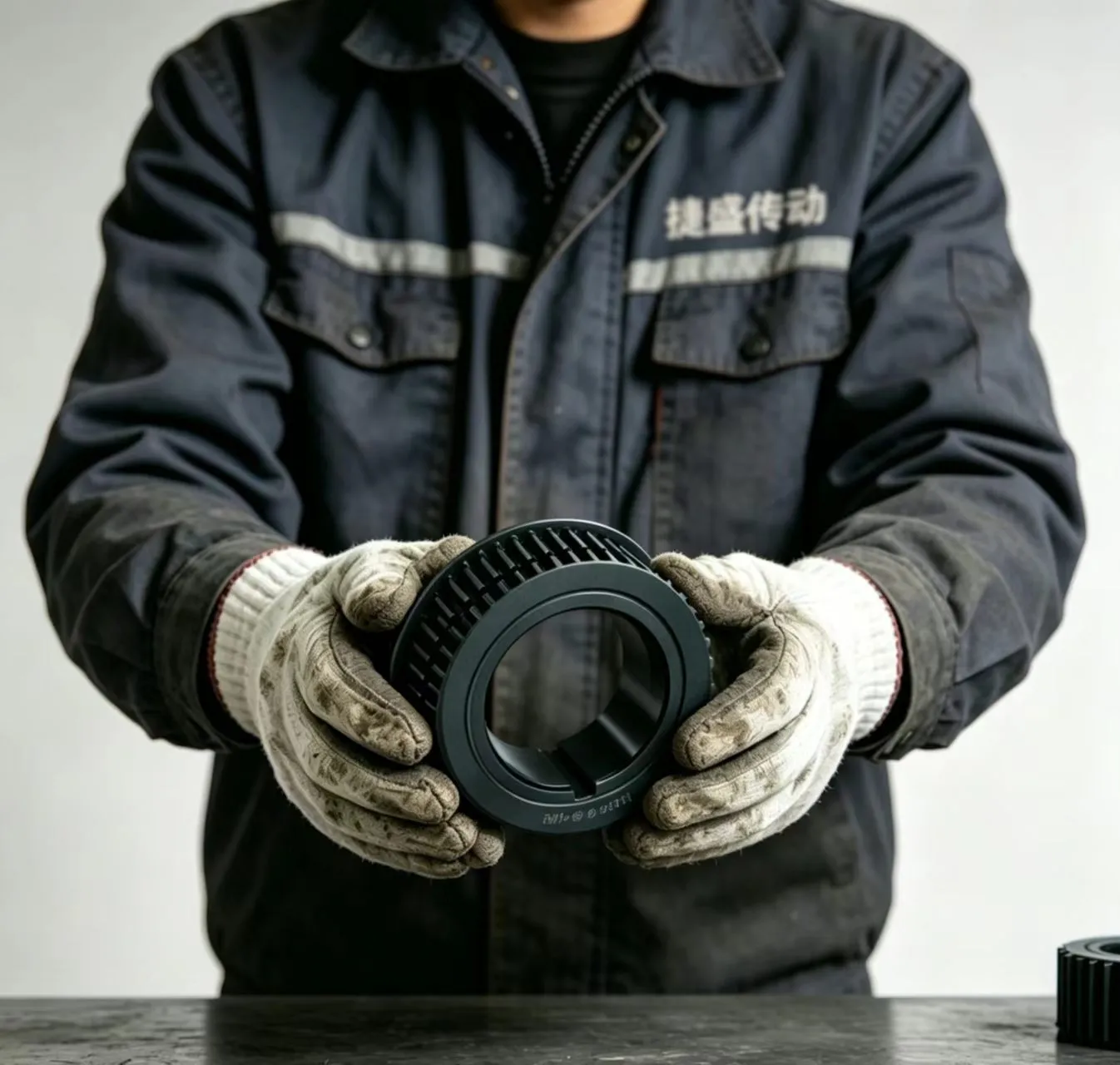
Product Showcase
Product Structure and Materials
Aluminium Timing Belt Pulleys feature a streamlined and compact design. The entire structure is engineered to ensure precise meshing, lightweight construction, wear resistance, heat dissipation, and stable power transmission. While the components are simple, the manufacturing tolerances are stringent. The core components include the pulley body, drive teeth, center bore, keyway, and flange structure. These parts work in concert to ensure precise meshing and smooth power transmission. Some high-end models may include additional auxiliary structures such as locking screws and dust-proof retaining rings. Detailed information is shown in the table below:
|
Structure Components (Structural Components) |
Brief Introduction (Brief Introduction) |
Core Requirements (Core Requirements) |
|
Pulley Body (Pulley Body) |
As the core bearing component, it provides support for the transmission tooth profile, bears the power torque, and transmits the synchronous rotational force. |
The material shall be lightweight with uniform structural density and sufficient rigidity; it shall not be distorted or cracked under long-term torque, and shall not be prone to thermal deformation. |
|
Transmission Tooth Profile (Transmission Tooth Profile) |
As the core meshing structure, it accurately engages with the tooth grooves of the timing belt to realize synchronous transmission and restrict the transmission trajectory. |
The tooth profile and pitch shall meet the accuracy requirements; the tooth surface shall be smooth without burrs, free of missing or chipped teeth, and there shall be no gap or tooth skipping when meshing with the belt. |
|
Central Shaft Hole (Central Shaft Hole) |
As the core structure matched with the transmission shaft, it realizes the fixed and synchronous rotation of the pulley and the transmission shaft. |
The aperture tolerance shall be accurate; it shall fit closely with the transmission shaft without looseness and have high coaxiality to avoid eccentric operation and shaking. |
|
Positioning Keyway (Positioning Keyway) |
It cooperates with the key of the transmission shaft to prevent relative sliding and rotational misalignment between the pulley and the transmission shaft, and transmits torque. |
The size of the keyway shall be accurate; it shall fit closely with the key with uniform force, and there shall be no sliding or keyway wear during long-term operation. |
|
Flange Structure (Flange Structure) |
Installed on both sides of the pulley, it limits the timing belt and prevents the belt from deviating or falling off during operation. |
It shall have a moderate height, fit the side of the belt without sharp edges, not scratch the belt, and ensure stable limiting without deviation. |
In addition to the basic structure, high-end Aluminium Timing Belt Pulleys incorporate locking screws and dust-proof retaining rings to further reinforce the connection between the pulley body and the drive shaft, prevent dust and debris from entering the shaft bore, avoid belt misalignment, and enhance transmission stability under harsh operating conditions.
The choice of material directly determines the lightweight design, heat dissipation, rigidity, and operational adaptability of Aluminium Timing Belt Pulleys. Significant performance differences exist among various aluminum alloys, making material selection a critical factor. The characteristics of core materials and their recommended applications are as follows:
6061 Aluminum Alloy: The mainstream material on the market, it offers excellent machinability, low density for effective weight reduction, good corrosion resistance, and superior heat dissipation. With moderate rigidity, it can withstand light to medium torque loads and offers exceptional value for money. Suitable for conventional automated equipment, small precision instruments, and low- to medium-speed transmission applications, it is the most widely used material for aluminum pulleys on the market.
7075 Aerospace Aluminum Alloy: A high-strength aluminum alloy with rigidity and impact resistance far superior to 6061 aluminum alloy. It features outstanding wear resistance and resistance to deformation, as well as better high-temperature performance. Its weight is slightly higher than 6061 but significantly lower than steel. Suitable for high-speed, heavy-load, and high-torque transmission applications.
5052 Aluminum Alloy: Offers excellent corrosion resistance and sufficient toughness, is resistant to rust and oxidation, provides stable machining precision, and is moderately priced. Its rigidity is slightly lower than that of 6061 aluminum alloy. Suitable for humid, mildly corrosive, and outdoor small-scale transmission equipment, it can withstand moisture and mild corrosive media, preventing wheel corrosion from affecting transmission accuracy.
Additionally, for special applications, hard anodized aluminum alloys can be selected to further enhance tooth surface hardness, wear resistance, and corrosion resistance. Standard cast aluminum offers low cost but has poor precision and rigidity, making it suitable only for simple, low-precision, and light-load transmission applications; it is rarely used in precision transmission fields.
Common Applications and Uses
Aluminium Timing Belt Pulleys are specifically designed for precise synchronization, lightweight construction, and high-speed transmission applications. Any equipment requiring precise speed ratios, synchronized power transmission, and reduced rotational inertia will incorporate Aluminium Timing Belt Pulleys, covering multiple industries such as automotive manufacturing, industrial automation, precision machine tools, and small-scale power equipment.
Automotive manufacturing and the engine sector are the core application areas. Aluminium Timing Belt Pulleys are used in automotive engine timing systems and the drive systems of new energy vehicle motors. Thanks to their lightweight and high-precision characteristics, they enable precise synchronized transmission of engine valve timing and motor power, reduce engine rotational inertia, and improve power response speed. At the same time, they rapidly dissipate heat, preventing belt aging caused by high temperatures and ensuring stable engine operation.
In the fields of automation equipment and linear transmission-including servo drive modules, assembly line conveyors, packaging machinery, and sorting equipment-precise synchronous transmission and rapid speed response are essential. The low inertia and slip-free characteristics of Aluminium Timing Belt Pulleys ensure synchronous multi-axis transmission, preventing misalignment and stuttering during operation, thereby enhancing the operational efficiency and transmission precision of automated equipment.
Precision machine tools and small-scale machining equipment-such as CNC engraving and milling machines, small grinders, and precision drive spindles-require extremely high precision in drive phase and rotational speed. Aluminum pulleys with precise tooth engagement eliminate drive slippage and phase shifts, ensuring the operational accuracy of cutting tools and spindles. At the same time, their lightweight design reduces spindle load, enhancing the machining precision and stability of the machine tools.
Small precision instruments and office equipment-such as 3D printers, office printers, precision testing instruments, and small medical transmission devices-have limited internal installation space and demand low equipment weight and low operating noise. Aluminum pulleys are compact, lightweight, and operate quietly, making them suitable for tight installation spaces. They enable precise micro-transmission, meeting the quiet operation and high-precision requirements of precision instruments.
Furthermore, they are widely used in power tools, textile machinery, food packaging equipment, and surveillance pan-tilt drive systems. As lightweight, high-precision core components in timing and synchronous drive systems, they play an irreplaceable role in applications that require both transmission accuracy and equipment lightweighting.
Key Points of Precision Assembly
Aluminium Timing Belt Pulleys are high-precision transmission components with delicate tooth surfaces and strict tolerances. Rough assembly can easily cause issues such as tooth surface scratches and misalignment, which may lead to transmission failures. Assembly must adhere to the principles of coaxial alignment, gentle handling, non-destructive operations, and precise fastening. The process is divided into four core steps to mitigate the risk of assembly deviations.
Preliminary Cleaning and Specification Verification: Thoroughly clean debris, oil residue, and burrs from the pulley bore, keyway, and drive shaft surface to prevent interference with coaxiality. Simultaneously verify the dimensional compatibility of all components, inspect the pulley tooth surfaces and bore for defects, and ensure a unified assembly reference.
Coaxial Alignment and Assembly: Precisely align the hub bore with the drive shaft and insert it smoothly; do not tilt or strike the hub to prevent damage to the tooth surfaces and bore. After insertion, verify the position to ensure coaxiality and keyway alignment meet standards, preparing for subsequent fastening.
Keyway Alignment and Locking: Gently insert the key into the corresponding keyway to ensure a snug fit with no play. Tighten the screws and nuts in a diagonal, staggered pattern while controlling the tightening torque to prevent uneven stress and deformation of the wheel body, ensuring synchronized rotation between the wheel body and the drive shaft.
Post-Assembly Closed-Loop Verification: Manually rotate the pulley to check for any binding, wobbling, or slippage; after installing the belt, verify the meshing condition to ensure there is no misalignment, abnormal noise, or tooth skipping. If合格, apply specialized grease to reduce wear and extend service life.
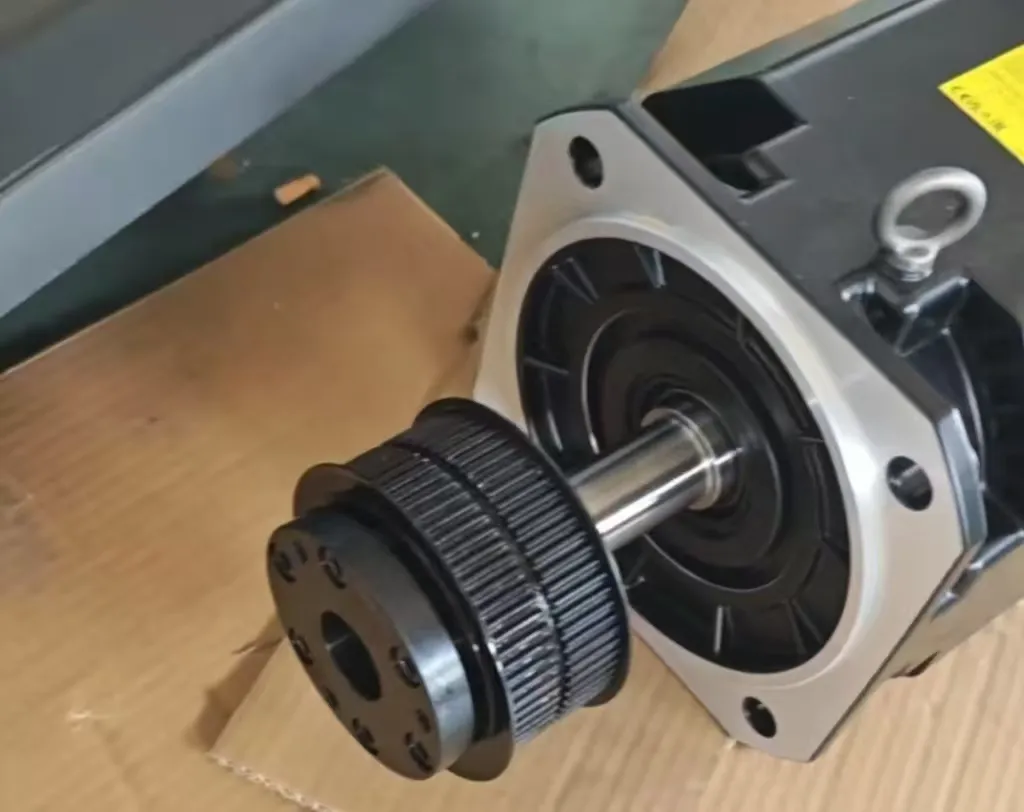
Product Assembly Showcase
Frequently Asked Questions (FAQ)
|
When selecting, installing, and using aluminum timing pulleys, issues such as mismatched specifications, misalignment during assembly, abnormal drive noises, and belt misalignment often arise. Based on real-world application scenarios, we have compiled the eight most common and practical questions below, along with precise and easy-to-understand answers to facilitate daily use and troubleshooting: Q: Must aluminum timing pulleys be a perfect match for the timing belt's tooth profile? Can pulleys with similar tooth profiles be used interchangeably? A: They must be a perfect match; pulleys with similar tooth profiles cannot be used interchangeably. Mismatched tooth profiles and pitch will result in excessive meshing clearance, tooth skipping, and drive slippage, accelerating wear on the tooth surfaces and the belt, and severely affecting synchronization accuracy. Selection must strictly follow the belt model.
Q: What causes belt misalignment or slippage during operation? How can this be resolved? A: There are three common causes: first, eccentric assembly of the pulley or misalignment; second, missing or insufficiently high side flanges; third, looseness between the drive shaft and the pulley. Solutions: Recalibrate the pulley's coaxiality, replace the pulley with one featuring suitable side flanges, and tighten the locking screws to ensure the pulley is secure.
Q: For high-speed, heavy-load transmission applications, which aluminum alloy pulley material should be selected? A: Prioritize 7075 aerospace-grade aluminum alloy, which offers high rigidity, impact resistance, wear resistance, and deformation resistance. It can withstand high-speed, heavy-load torque and is resistant to thermal deformation. If both lightweight construction and moderate load capacity are required, choose 6061 aluminum alloy with hard anodized coating.
Q: What causes abnormal noise and excessive vibration during pulley operation? A: There are two primary causes: First, misalignment, where the pulley is not coaxial with the drive shaft; second, tooth wear, burrs, or poor belt engagement; third, a loose shaft bore or excessive clearance in the keyway. Solutions: Re-align the pulley, grind down burrs on the tooth surfaces or replace the pulley, and adjust the keyway clearance.
Q: How should one choose between aluminum and steel timing pulleys? A: For applications requiring lightweight construction, low inertia, high-speed response, and excellent heat dissipation, choose an aluminum pulley, which is suitable for medium to light loads and high-speed precision applications. For applications requiring heavy loads, high torque, and high rigidity, choose a steel pulley, which is suitable for heavy-duty, high-load transmission applications. The two should not be substituted for one another indiscriminately.
Q: Will aluminum timing pulleys corrode in humid environments? How should they be protected? A: Aluminum alloy itself is not prone to rust, but prolonged exposure to humid conditions can cause oxidation and corrosion. We recommend using 5052 corrosion-resistant aluminum alloy or anodized versions. Additionally, ensure proper equipment sealing to prevent prolonged moisture exposure to the pulley body.
Q: What should I do if the center bore of the pulley is too large and the drive shaft is loose? A: Do not force the pulley into use. Excessive clearance in the bore will cause transmission misalignment and slippage. You must replace the pulley with one that has a properly sized bore or install a precisely fitting bushing. Do not attempt to resolve this by filling the gap with foreign materials or using excessive force to tighten it, as this may damage the pulley and drive shaft.
Q: Can an aluminum timing pulley still be used after the tooth surfaces have worn down? A: Continued use is not recommended. Tooth surface wear can lead to poor meshing, transmission slippage, and reduced synchronization accuracy, accelerating belt aging and potentially causing tooth skipping or transmission failure. Replace the pulley with one of the same specifications promptly to prevent more serious equipment malfunctions. |
References
Precision Machining and Assembly Specifications for Timing Pulleys. China Machinery Industry Standards Service Network
Technical Manual for Selecting Aluminum Alloy Synchronous Pulleys. Chinese Society of Mechanical Engineers
Guide to Operating Conditions and Maintenance of Timing Drive Systems. CNC Technology Network
Key Points on Structural Design and Material Application for Aluminum Synchronous Pulleys. Industrial Control Network
Technical Documentation on Precision Inspection and Selection of Precision Timing Pulleys. Misumi Official Technical Documentation
Contact Us
📧 Email: lsjiesheng@gmail.com
🌐 Official website: https://www.automation-js.com/


