

Hey! Many mechanical assembly and maintenance technicians use Cylinder Linear Shaft when installing linear motion equipment. Yet this unassuming shaft often causes headaches: Either the wrong model is chosen, causing equipment to run sluggishly or make abnormal noises after installation, or the material isn't suited for the operating conditions. Before long, it rusts, wears out, or even bends and deforms. Replacing the shaft costs money and time, requiring production line stoppages for rework and delaying production schedules. Many technicians know Cylinder Linear Shaft serve to "guide and transmit force," but they lack clear selection criteria or standards. Relying solely on experience to pick a random model is bound to cause problems. Today, we'll break down the selection guide for Cylinder Linear Shaft in plain language. We'll clarify the key points for each type, suitable applications, practical techniques, and pitfall avoidance methods. This will help you grasp the selection logic, choose the right linear shaft, and ensure smooth, stable linear motion with fewer failures.
The key to understanding the selection guide for Cylinder Linear Shaft is to first grasp the core logic. Don't blindly rely on experience to pick models or make random purchases.
Many technicians fall into pitfalls precisely because they haven't grasped the core principles of cylinder linear shaft selection. Only by understanding these fundamentals can you avoid common pitfalls at their source, cutting corners and wasting money.
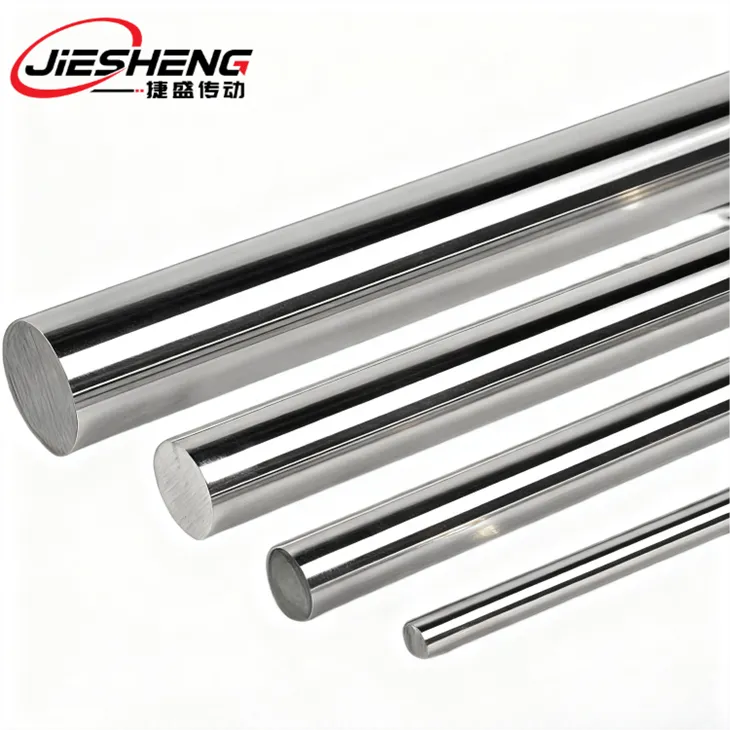
Let's start by clarifying the most crucial point-the foundation for mastering cylindrical linear shaft selection: The core principle is "matching the equipment and adapting to the operating conditions." It's not simply about "choosing a cylindrical shaft." Instead, you must select the appropriate specifications, materials, precision, and surface treatment based on the equipment's load capacity, movement speed, working environment, and guiding accuracy. Only this approach ensures precise alignment with the equipment's linear motion requirements, resolving common pain points like "stuttering operation, excessive wear, and insufficient precision." Therefore, never base your selection solely on "whether the dimensions fit." Instead, prioritize the equipment's operating conditions and motion demands to choose the right cylindrical linear shaft.
Core Practical Guide: Mastering the 2 Key Selection Principles for Cylinder Linear Shaft to Avoid Pitfalls
No complex theories-just actionable insights for real-world applications. We break down the two core selection principles, detailing selection methods, suitable scenarios, and practical considerations for each. Instantly identify the right approach, eliminate ineffective options, and save time and costs.
Specification Selection: Prioritize "Dimensional Compatibility"-Incorrect Sizes Undermine Everything
Specifications form the foundation of linear shaft selection, focusing on diameter and length. These directly determine installation feasibility and load-bearing capacity. In practice, measure two critical dimensions before selection: First, the inner diameter of the equipment's guide hole. The shaft diameter should be 0.01-0.03mm smaller than the guide hole. Too loose causes wobble and precision loss; too tight prevents installation and causes operation jams. Second, the travel distance of the equipment's linear motion. The shaft length should exceed the travel distance by 5-10mm to allow space for secure mounting. This prevents issues like insufficient length for fixation or excessive length causing waste. Practical tip: Measure the guide hole ID and travel distance first. For diameter, err on the side of smaller rather than larger; for length, err on the side of longer rather than shorter. Ensure precise matching without guesswork.
Precision Selection: Sufficient precision directly impacts equipment positioning
Many technicians focus solely on dimensions and materials during selection, overlooking precision. Yet inadequate precision renders even optimal dimensions and materials useless-insufficient linear shaft precision causes deviation, stuttering, and inaccurate positioning during linear motion. For precision equipment, insufficient accuracy directly compromises product quality. The core principle of precision selection is "aligning with equipment requirements." Clearly define the required accuracy grade during selection: - Standard precision suits conventional equipment with basic guidance needs. - High precision is essential for precision machinery, where linear and circular errors must be controlled within 0.005mm for smooth motion and precise positioning. Practical tip: Always select high precision for precision equipment; choose standard precision for conventional equipment. Avoid blindly pursuing high precision to prevent unnecessary procurement costs.

Supplement: Reference Guide for Cylindrical Linear Shaft Materials and Surface Treatments – Quick Selection to Avoid Pitfalls
While not breaking down material and surface treatment selection details separately, both directly impact shaft lifespan and equipment operation. Here is a core compatibility table for quick reference during selection, helping avoid mismatch pitfalls:
|
Material + Surface Treatment |
Applicable Working Conditions |
Applicable Equipment Type |
Selection Notes |
|
Ordinary Carbon Steel + No Treatment |
Light load, normal temperature, dry, non-corrosive conditions |
Small manual equipment, simple conveying equipment |
Low cost; avoid use in humid and heavy-load scenarios; prone to rust |
|
Stainless Steel + No Treatment |
Humid, slightly corrosive, normal temperature conditions (outdoor/humid environment) |
Outdoor equipment, waterproof automated equipment |
Corrosion-resistant and rust-proof; precision can be customized; not suitable for heavy load and high temperature |
|
Carbon Steel + Chromium Plating Treatment |
Medium-heavy load, medium-high speed, normal temperature, slightly corrosive conditions |
Machine tools, automated production lines, precision conveying equipment |
Wear-resistant and smooth, smooth operation; regular lubrication can extend service life |
|
Carbon Steel + Galvanizing Treatment |
Humid, outdoor, slightly corrosive, light to medium load conditions |
Small outdoor equipment, guiding equipment in humid environments |
Strong rust resistance; avoid use in high-speed and heavy-load scenarios; prone to wear |
After selecting a linear shaft, the essential step to check: Quickly determine suitability to avoid core risks
After selecting a cylindrical linear shaft, don't rush to start production after installation. Spend 3 minutes performing one check to quickly determine if the shaft is suitable and if the selection meets specifications. This helps prevent major issues like equipment jamming or inaccurate positioning, eliminating the need for later rework:
Check compatibility and smoothness: After installation, gently push the moving parts by hand. Ensure no stuttering, noticeable resistance, or abnormal noises. Use a dial indicator to measure linear movement deviation-it should meet equipment requirements. Verify the linear guide fits snugly within the guide sleeve with no looseness or wobbling. If these criteria are met, the selection is valid for normal operation.
Key Pitfall Avoidance Points: Remember these 3 points to avoid pitfalls and unnecessary expenses when selecting Cylinder Linear Shaft
Based on the preceding selection criteria analysis, here are 3 core pitfall avoidance points-simple and easy to remember. Frontline technicians can directly reference them during practical operations to prevent selection errors, cost wastage, and repeated rework:
Don't select blindly-measure parameters first: Before selecting, measure the guide hole inner diameter and travel distance. Clearly define equipment operating conditions (load, speed, environment), then determine specifications and precision. Use the material and surface treatment compatibility chart to select the right combination-don't rely on guesswork.
Don't overlook material and surface treatment: Refer to the material compatibility chart below for selection. Choose materials and surface treatments suited to the working environment to prevent shaft wear and rust, extending service life.
Don't skip installation checks: After installing the selected shaft, always verify compatibility and smoothness. If you encounter jamming, looseness, or excessive deviation, replace or re-select immediately to avoid future equipment damage or production disruptions.
Summary
The guide to selecting Cylinder Linear Shaft fundamentally revolves around "precisely matching equipment and aligning with operating conditions." Its core lies in four points:
- Specifications matching dimensions
- Materials suited to operating conditions
- Precision meeting requirements
- Surface treatments adapted to environments
No complex expertise is required. The key is to understand the equipment's actual motion needs and working environment, avoiding blind trends or experience-based selection. Don't be intimidated by selecting linear shafts. Just focus on the core principles: measure parameters first, then prioritize key points. Never compromise on material quality or precision. Always inspect after installation. This approach ensures you select the right cylindrical linear shaft for your application. It enables smooth, stable linear motion for your equipment, reduces failures, saves time, and lowers spare part costs. Follow these steps during practical operation to avoid detours and pitfalls.
Contact Us
📧 Email: lsjiesheng@gmail.com
🌐 Official website: https://www.automation-js.com/


