

Ball screw prices remain high? In-depth analysis of the behind the truth
In the field of high-end equipment manufacturing, ball screws are like the "heart" of precision machinery, driving the precise operation of CNC machine tools, semiconductor equipment and industrial robots. However, its unit price of tens of thousands of dollars or even hundreds of thousands of dollars, so that many companies in the procurement of a dilemma. Behind this price phenomenon, is the stringent requirements of precision manufacturing technology, special materials, high cost of input and market supply and demand for the special pattern of the joint role of the results. Through in-depth analysis of these influencing factors, enterprises can find a more scientific strategy to reduce costs and increase efficiency.
First, the core of precision transmission: the technical advantages of ball screws
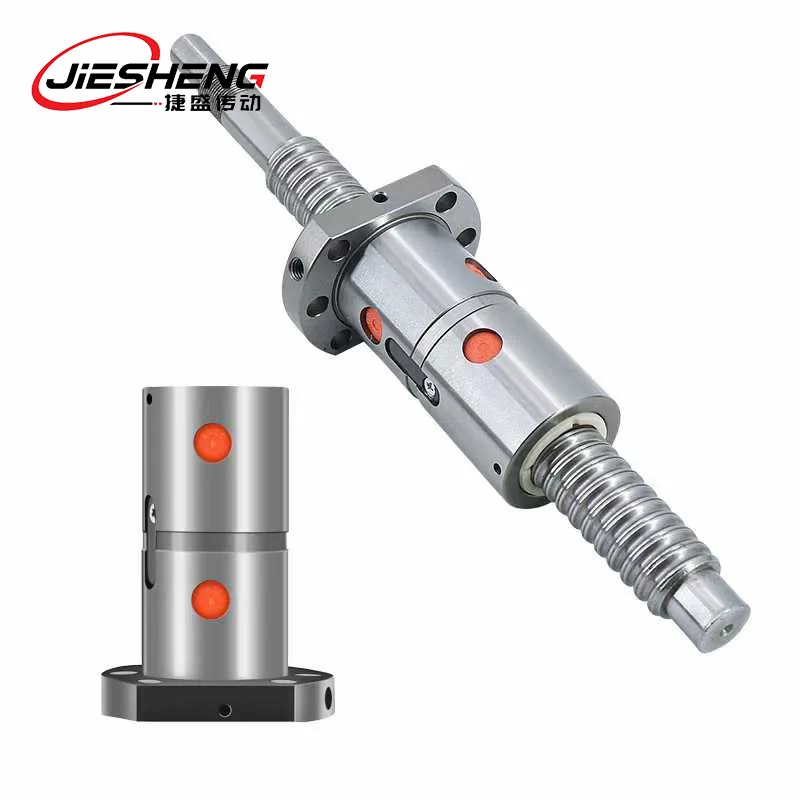
Ball screws through a unique rolling friction design, the efficiency of the traditional sliding screws from 30% - 40% to more than 90%, while realizing micron or even sub-micron level positioning accuracy. Its core structure consists of a high-precision screw shaft, a circulating ball system and a specially-designed nut, which converts rotary motion into linear motion through the circulating motion of the ball in the spiral raceway. This efficient and low-consumption transmission mode, making it an indispensable key component of modern high-end manufacturing equipment, widely used in aerospace, medical equipment, 3C electronics and other fields with extremely high precision requirements.
Second, the five major root causes of high prices
1. Extreme precision brought about by the high cost of manufacturing
To achieve ±0.002mm repeatable positioning accuracy, the manufacturing process of ball screws requires up to 20 precision machining processes. From the high-precision grinding of the threaded raceway to the precision grinding of the ball and raceway, each step requires the use of millions of dollars worth of specialized equipment. For example, CNC thread grinding machine needs to be controlled within a single processing error of 0.0005mm, detection links need to be equipped with laser interferometer, roundness meter and other precision measuring equipment, the acquisition and maintenance costs of these equipment directly pushed up the price of the product.
2. High-performance materials cost premium
In order to meet the high load, high speed requirements, ball screws usually use GCr15 bearing steel, 9Cr18Mo stainless steel and other high-alloyed materials, the purchase cost is 5-8 times of ordinary steel. In special areas such as aerospace, titanium alloys and ceramic-based composites are used, which further increases the cost. In addition, these materials also need to go through vacuum quenching, carburizing treatment and other special processes to enhance the hardness and wear resistance of the material, only the heat treatment link will increase the cost of 15%-20%.
3. Low production efficiency due to complex processes
The manufacturing of ball screws involves various processes such as turning, milling, rolling, grinding, etc., and the interface between the processes is extremely demanding. Thread rolling process, for example, need to accurately control the rolling pressure of more than 1000N and 0.01mm level of feed, a slight deviation will lead to the scrapping of the entire screw. In addition, the production process is difficult to realize the full automation, a lot of reliance on the experience of skilled operators, making the production cycle is long, low yield, and further increase the unit cost.
4. Scale limitation of customized production
Due to the huge difference in the requirements of different equipment for ball screws in terms of lead, diameter, accuracy level and other parameters, more than 80% of the products need to be customized production. The production mode of small batch and multiple varieties makes it difficult for enterprises to reduce costs through scale. Each customization needs to redesign the mold, adjust the process parameters, resulting in high fixed cost sharing, product prices naturally rise.
5. Market premium formed by technology monopoly
High-end ball screw market has long been monopolized by Japanese and German companies, these companies rely on decades of technology accumulation and patent barriers, firmly grasp the pricing power. Although domestic enterprises in the low-end areas to make breakthroughs, but in the ultra-precision ball screws are still dependent on imports, this market pattern makes the price lack of competitive space.


