

Hey! Many packaging equipment assembly and maintenance technicians deal with support-type linear guide shafts daily-they're hidden in the core components of filling machines, labeling machines, and palletizers, supporting transmission parts and guiding precise movements. Yet, many technicians merely view them as "ordinary support components," thinking "as long as they can fix and slide, that's enough," without truly understanding where their importance lies. Some overlook proper selection and matching, leading to frequent equipment jams and subpar packaging accuracy after installation. Others perform perfunctory maintenance, failing to address worn or rusted guide shafts promptly, which reduces packaging efficiency and causes equipment downtime. Still others blindly replace standard guides, ignoring the core advantages of support-type linear guide shafts, ultimately increasing repair costs and disrupting production schedules. Today, we'll break down the core importance and application scenarios of support-type linear guide shafts in the packaging equipment industry in plain language. We'll clarify practical considerations and pitfall avoidance techniques to help you grasp its core value, emphasize proper selection and maintenance, and ensure stable operation and increased production capacity for your packaging equipment.
Let's start with the most critical point-the foundation for understanding its importance: Supported Linear Rail Shafts serve as the "precision transmission backbone" of packaging equipment. Their core value lies in "stable support + precise guidance." Unlike standard rails that focus solely on either support or guidance, these shafts integrate both functions, directly determining the operational stability, packaging accuracy, and production efficiency of packaging equipment. As the packaging industry evolves toward high-speed, flexible, and intelligent transformation, demands for operational precision and stability in packaging equipment grow increasingly stringent. The role of support-type linear guide shafts becomes irreplaceable-whether meeting the high-precision requirements of food and pharmaceutical packaging or fulfilling the high-speed demands of express sorting and bulk boxing, their support and guidance are indispensable. A common misconception persists: many technicians mistakenly believe "standard rails can replace support-type linear guide shafts." However, standard rails lack sufficient rigidity and precision. Long-term use leads to equipment vibration and packaging inaccuracies, ultimately proving counterproductive. Never underestimate their importance-selecting the right components and maintaining them properly is key to minimizing packaging equipment failures.
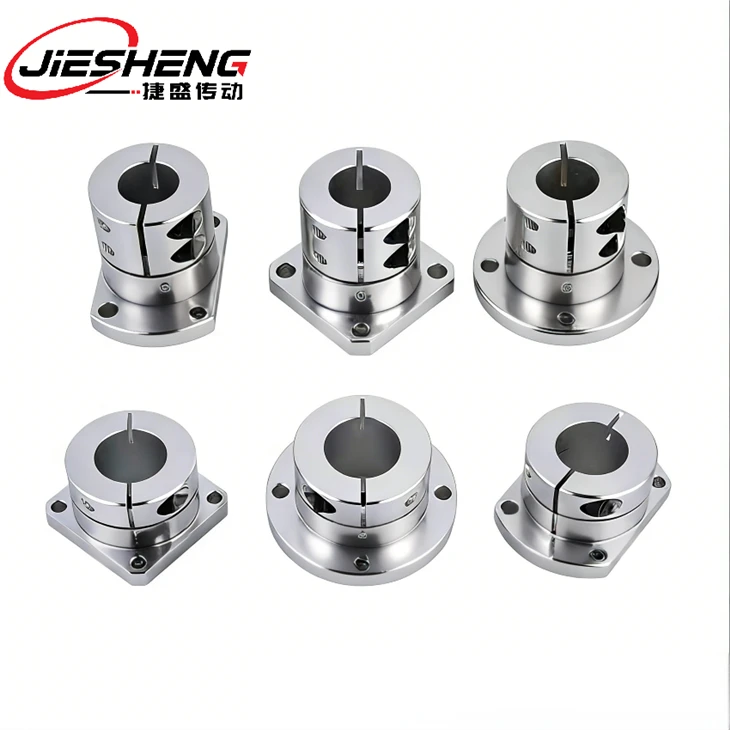
Core Understanding: 2 Key Points to Grasp the Core Value of Support-Type Linear Guide Shafts
To grasp the significance of support-type linear guide shafts in the packaging equipment industry, first master these two core concepts. When applied to real-world packaging scenarios, they reveal why these components are indispensable, helping you avoid the pitfalls of neglecting or misusing them.
Concept 1: Support-Type Linear Guide Shafts Are the "Foundation for Stable Operation" in Packaging Equipment
Most packaging equipment requires prolonged continuous operation-like food filling machines or parcel sorting systems running 8–12 hours daily, or even 24/7 without shutdown. This demands stable support for core transmission components. A primary function of support-type linear guide shafts is to provide robust support for moving parts, distributing component weight and operational impact forces. This prevents component misalignment or vibration, ensuring long-term stable equipment operation.
Key Consideration: Packaging environments are often harsh-dusty workshops or humid conditions. Supported Linear Rail Shafts, with premium materials and sealed designs, withstand these challenges. They resist rust and wear, delivering superior stability over standard guides.
Insight 2: Supported Linear Rail Shafts Are the Core Assurance for Packaging Precision Compliance
The packaging industry demands extreme precision-whether it's seal alignment in food packaging, label deviation in pharmaceutical packaging, or sorting positioning in express delivery packaging. Even a 0.1mm deviation can lead to packaging rejection, product scrapping, or even compromise food safety. The precise guidance function of support-type linear guide shafts ensures smooth movement of packaging equipment's moving parts along fixed trajectories. This maintains repeat positioning accuracy within ±0.01mm, eliminating deviations caused by misalignment or vibration. Consequently, every packaged product meets stringent standards.
Simply put, without the precise guidance of support-type linear guide shafts, packaging equipment becomes like a "gun without a sight." Incorrect liquid levels during filling, crooked labels during application, and mis-sorting or missed items during sorting not only increase scrap rates but also damage corporate reputation.
Core Breakdown: The 4 Critical Roles of Supported Linear Guide Axles in Packaging Equipment
The importance of supported linear guide axles isn't theoretical-it manifests in every operational aspect of packaging equipment. From efficiency and equipment lifespan to production costs and industry adaptability, every function relies on their support. Each point directly impacts our technicians' daily operations and the company's production efficiency.
Enhance equipment operational efficiency, ensure continuous production, and minimize downtime losses.
The packaging industry primarily operates on batch production, where efficiency equates to profitability. Any equipment downtime incurs significant losses per minute. The low-friction design of support-type linear guide shafts substantially reduces operational resistance in moving components, enabling smoother and faster equipment operation. Simultaneously, their wear-resistant and corrosion-resistant properties minimize failures, ensuring prolonged continuous operation and boosting production efficiency.
Extend equipment lifespan, reduce maintenance costs, and improve cost-effectiveness
Core components of packaging equipment are costly to replace and require lengthy maintenance cycles. Supported Linear Rail Shafts feature rational structural design using hardened steel or premium alloy materials, combined with sealed dust-proof construction. Their wear resistance, corrosion resistance, and durability effectively extend the lifespan of both the shafts themselves and surrounding transmission components. This reduces repair and replacement frequency, lowering maintenance expenses.
In practical operation, we clearly observe: under normal maintenance, high-quality support-type linear guide shafts achieve a service life of 5-8 years, whereas standard guides typically last only 1-2 years. Frequent replacements not only increase component costs but also disrupt production.
Adapting to Diverse Packaging Scenarios, Driving Industry Upgrades, and Enhancing Competitiveness
As the packaging industry evolves, scenarios grow increasingly diverse-from basic food and daily goods packaging to precision medical and electronic product packaging; from standardized bulk packaging to personalized, flexible solutions. This demands higher standards for packaging equipment. Support-type linear guide shafts offer exceptional adaptability, meeting varied scenario requirements and empowering enterprises to achieve product upgrades.
Key Pitfall Avoidance: Remember 2 Points for Correct Selection and Maintenance of Supported Linear Guide Axles
Building on the importance analysis above, here are two core pitfall avoidance points-simple and easy to remember. Packaging equipment assembly and maintenance technicians can directly reference these during operations to prevent equipment failures caused by incorrect selection or improper maintenance. This ensures supported linear guide axles perform optimally, reducing costs and boosting efficiency:
Avoid Blind Selection: Choose Supported Linear Rail Shafts based on packaging equipment type, precision requirements, and load capacity. Do not blindly pursue high precision or high load ratings, nor substitute with standard guide rails. Prevent mismatches causing insufficient precision or equipment failure. During selection, calculate actual forces to ensure rated load capacity ≥ 1.5 times total force, allowing sufficient expansion allowance.
Do not neglect installation precision: During installation, calibrate the guide shaft's levelness and coaxiality. Ensure secure mounting to prevent vibration and wear caused by eccentric assembly, which can impact the guide shaft's lifespan and packaging accuracy. Installation surfaces must remain flat, with uniform bolt preload to avoid stress concentration.

Summary
The significance of support-type linear guide shafts in the packaging equipment industry lies fundamentally in "ensuring precision, enhancing efficiency, extending service life, and enabling upgrades." They are not ordinary auxiliary components but the core support for stable operation and efficient production of packaging equipment, directly impacting product quality, corporate productivity, and industry competitiveness. As the packaging industry evolves toward high-speed, intelligent, and flexible operations, the role of support-type linear guide shafts will become increasingly prominent, serving as the "invisible engine" driving the industry's advancement.
Contact Us
📧 Email: lsjiesheng@gmail.com
🌐 Official website: https://www.automation-js.com/


